Iași covers well on foot in the centre and needs transport only for the hills. The routes below are ordered geographically, not thematically — that is the difference between seeing six sights and seeing three plus four journeys.
One day: the core
Every point below is within walking distance of the others.
- The Palace of Culture — start in the morning, when it is emptier. Four museums under one roof; if you only have time for one, the Museum of Moldavian History gives the best context for the rest of the day.
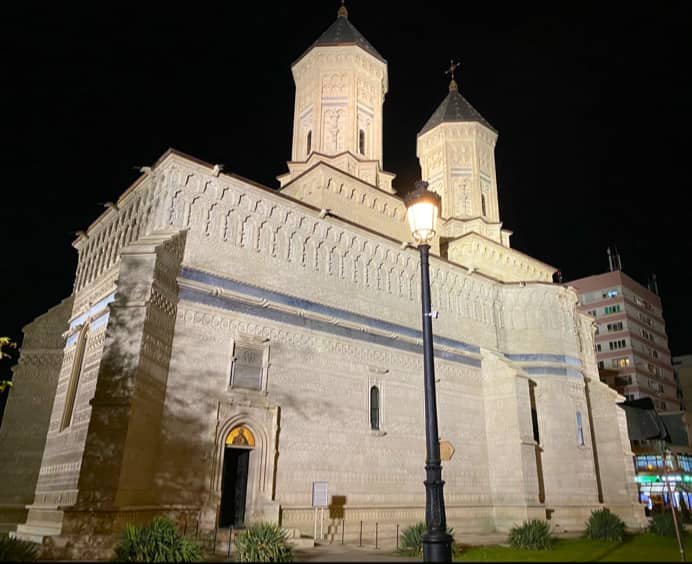
- Trei Ierarhi Monastery — a few minutes away. Take your time over the façade: it is carved in its entirety, which you will not see anywhere else.
- St Nicholas the Princely Church — founded by Stephen the Great, the oldest in the city.
- Lunch around Palas or on Ștefan cel Mare boulevard.
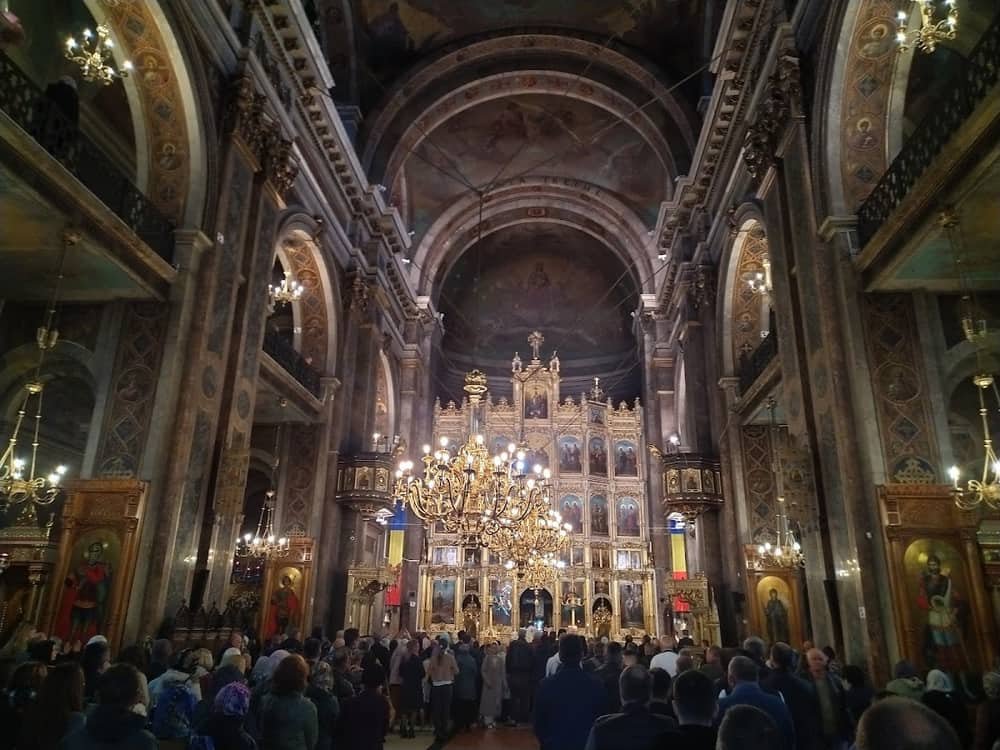
- The Metropolitan Cathedral — the relics of Saint Parascheva, Tattarescu's painting.
- The National Theatre — Romania's first, 1840. Even just from outside.
- In the evening — see where to go out.
Two days: add Copou
The second day climbs the hill. Take tram 1 from the centre.
- Copou Garden — Romania's oldest landscaped public park, and Eminescu's linden tree.
- "Alexandru Ioan Cuza" University — the country's first modern university (1860). The Hall of the Lost Footsteps can usually be visited; check the hours.
- The "Anastasie Fătu" Botanical Garden — Romania's first (1856). Allow at least two hours; it is large.
- The Vasile Pogor Museum — the house where Junimea met.
- Walk down to Ion Creangă's Bojdeuca in Ticău — Romania's first memorial house, a two-room cottage.
Three days: the hills
The third day leaves the centre. Check routes on the transport page or take a taxi — these are real climbs.
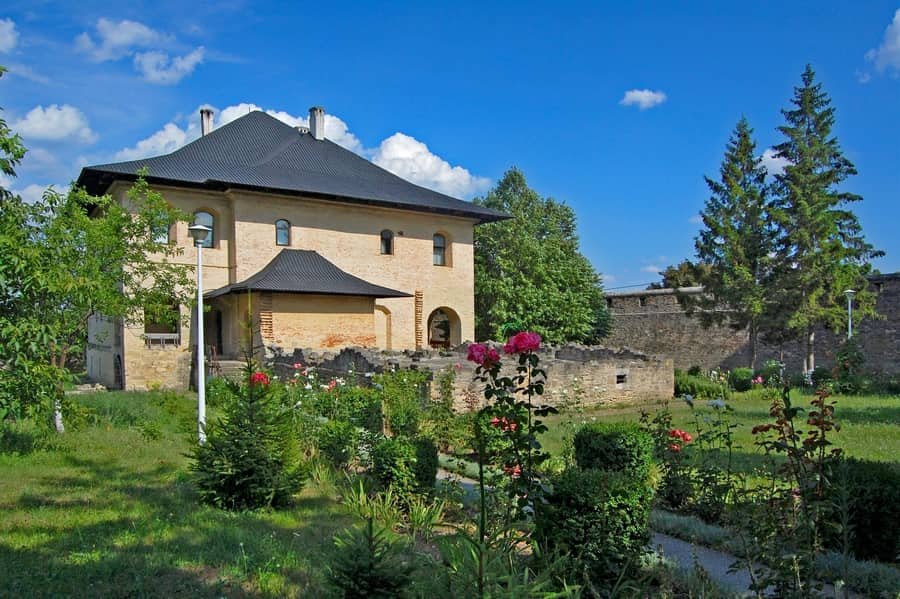
- Cetățuia Monastery — a fortified enclosure and the best view over the city.
- Galata Monastery — on the western hill, above the Bahlui valley.
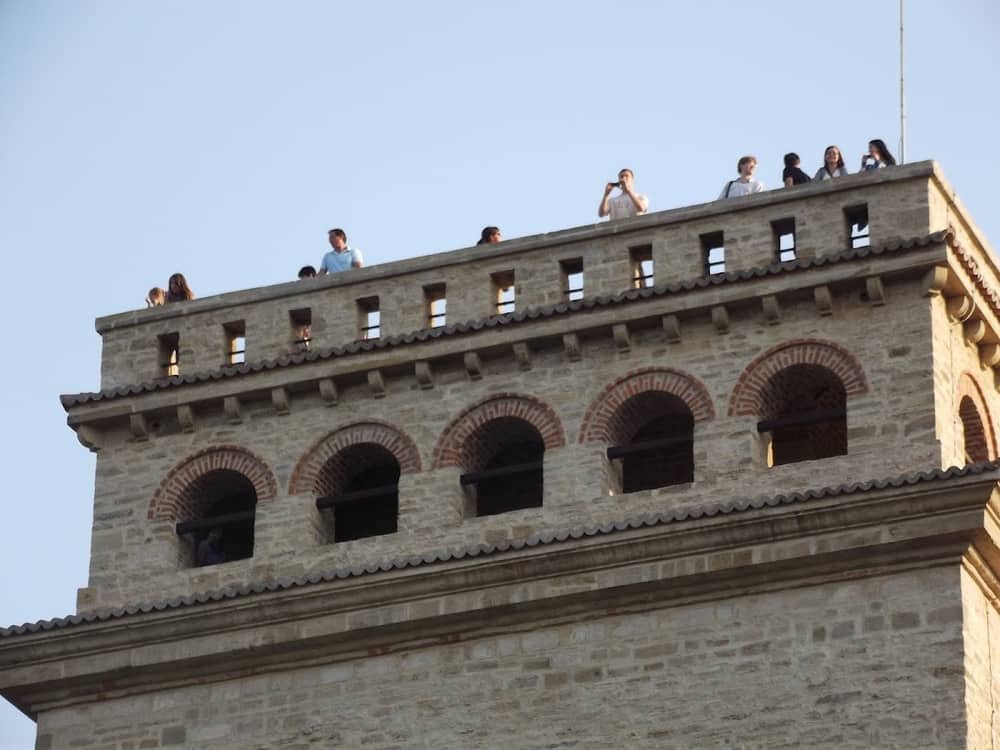
- Golia Monastery — in Târgu Cucu; climb the 30-metre tower.
- The Repedea reserve — if you want something outside the urban register: outcrops with marine fossils.
- The Ciric lakes — the locals' leisure ground, good in summer.
If it rains
Iași is a good city in bad weather, because the museums are concentrated. The Palace of Culture alone can fill half a day. Add the Union Museum, the Natural History Museum and Dosoftei's House and the day is covered without much time outdoors.
Practical rules
- Check museum hours before setting out. They change seasonally, and some close on Mondays.
- Get the 3-day CTP pass (30 lei) if you are staying a full weekend — it pays for itself quickly.
- Avoid 14 October unless you are coming for the pilgrimage. See churches and monasteries.
- Wear comfortable shoes. The city sits on hills, and the difference in level is felt.
The mistake most people make
Ordering the route thematically instead of geographically. Iași is built on seven hills, between 45 and 95 metres of altitude, and a plan that jumps from a monastery on one hill to a museum in the centre and back to another monastery costs an extra hour of walking every day.
The routes above are ordered by where things are, not by what they represent. The result is that you see more, in the same time.
What is worth paying for and what is not
The 3-day CTP tourist pass costs 30 lei and pays for itself on day two if you go up to Copou and down to the hills at least once. A single ticket is 4 lei, valid 120 minutes.
A taxi to the hilltop monasteries is worth it. Cetățuia and Galata are real climbs, and many visitors take a taxi up and walk down — the rational option, especially in summer.
A rental car is not worth it for the city. The centre is walkable, parking costs 7 lei an hour between 08:00 and 20:00, and the tram covers the rest. It only helps for trips outside Iași.
If you only have one afternoon
It can be done. The order: the Palace of Culture — at least the exterior and one museum — then Trei Ierarhi for the façade, then the Metropolitan Cathedral. They are minutes apart and cover the city's three layers: medieval, nineteenth century and contemporary symbol.
What you sacrifice is Copou, meaning the university and literary side. For that you need a full morning.
In short
- One day: the Palace of Culture, Trei Ierarhi, St Nicholas the Princely, the Metropolitan Cathedral — all central, on foot.
- Two days: add Copou — the Botanical Garden, Copou Garden, the University, the Pogor Museum, the Bojdeuca.
- Three days: the hills — Cetățuia, Galata, Golia, Repedea.
- Order geographically, not thematically. The city sits on seven hills; hopping between them costs an hour a day.
- The 3-day CTP pass costs 30 lei and pays for itself on day two.
- In the rain: the Palace of Culture fills half a day with four museums; the Palas area is covered.
- Avoid the first half of October, unless you are coming for the pilgrimage.
The mistake most people make
Ordering the route thematically instead of geographically. Iași is built on seven hills, between 45 and 95 metres of altitude, and a plan that jumps from a monastery on one hill to a museum in the centre and back to another monastery costs an extra hour of walking every day.
The routes above are ordered by where things are, not by what they represent. The result is that you see more, in the same time.
What is worth paying for and what is not
The 3-day CTP tourist pass costs 30 lei and pays for itself on day two if you go up to Copou and down to the hills at least once. A single ticket is 4 lei, valid 120 minutes.
A taxi to the hilltop monasteries is worth it. Cetățuia and Galata are real climbs, and many visitors take a taxi up and walk down — the rational option, especially in summer.
A rental car is not worth it for the city. The centre is walkable, parking costs 7 lei an hour between 08:00 and 20:00, and the tram covers the rest. It only helps for trips outside Iași.
If you only have one afternoon
It can be done. The order: the Palace of Culture — at least the exterior and one museum — then Trei Ierarhi for the façade, then the Metropolitan Cathedral. They are minutes apart and cover the city's three layers: medieval, nineteenth century and contemporary symbol.
What you sacrifice is Copou, meaning the university and literary side. For that you need a full morning.
Frequently asked questions
What can I see in Iași in a single day?
The Palace of Culture, Trei Ierarhi, St Nicholas the Princely and the Metropolitan Cathedral — all central and within walking distance. That is the core, and it fits comfortably into one day.
Is the Botanical Garden in Iași worth it?
Yes. It is Romania's first botanical garden, opened in 1856, and one of its largest. Allow at least two hours.
How do I reach the hilltop monasteries?
By CTP bus or by taxi. These are genuine climbs, so for Cetățuia and Galata many people take a taxi up and walk down.
What is there to do in Iași when it rains?
The museums are concentrated in the centre. The Palace of Culture houses four museums and can fill half a day on its own; add the Union Museum and the Natural History Museum.
Do I need a car in Iași?
Not for the city — the centre is walkable and the tram covers the rest. A car only helps for trips outside town.