The reason the monasteries around Iași look like fortresses is simple: the city was the capital of Moldavia from 1564, and therefore a target. The hilltop monasteries were not only places of worship but refuges and lookout points, with curtain walls, corner towers and bell towers from which the road could be seen.
The full heritage guide is in churches and monasteries. This is the route.
The central part — morning, on foot
1. Trei Ierarhi
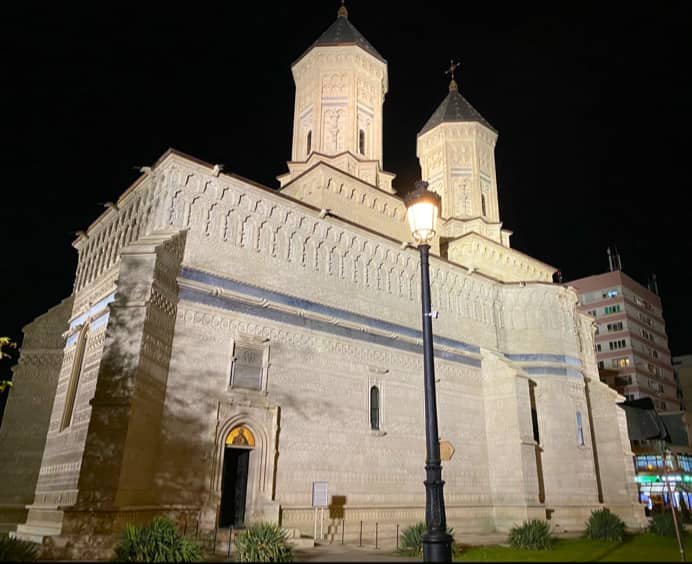
Trei Ierarhi Monastery, Vasile Lupu's foundation, seventeenth century. Stand in front of the façade before you go in: it is covered entirely in carved stone, in a continuous decorative system unique in Romanian Orthodox architecture.
Moldavia's first printing press operated here — in 1643 it produced *Varlaam's Homiliary*, the first book printed in Romanian on Moldavian soil. And it was here that the relics of Saint Parascheva were brought in 1641.
2. St Nicholas the Princely
St Nicholas the Princely Church, a few minutes' walk away. Founded by Stephen the Great and the oldest surviving church in the city. It was the court church: the voivodes of Moldavia were anointed here.
3. The Metropolitan Cathedral
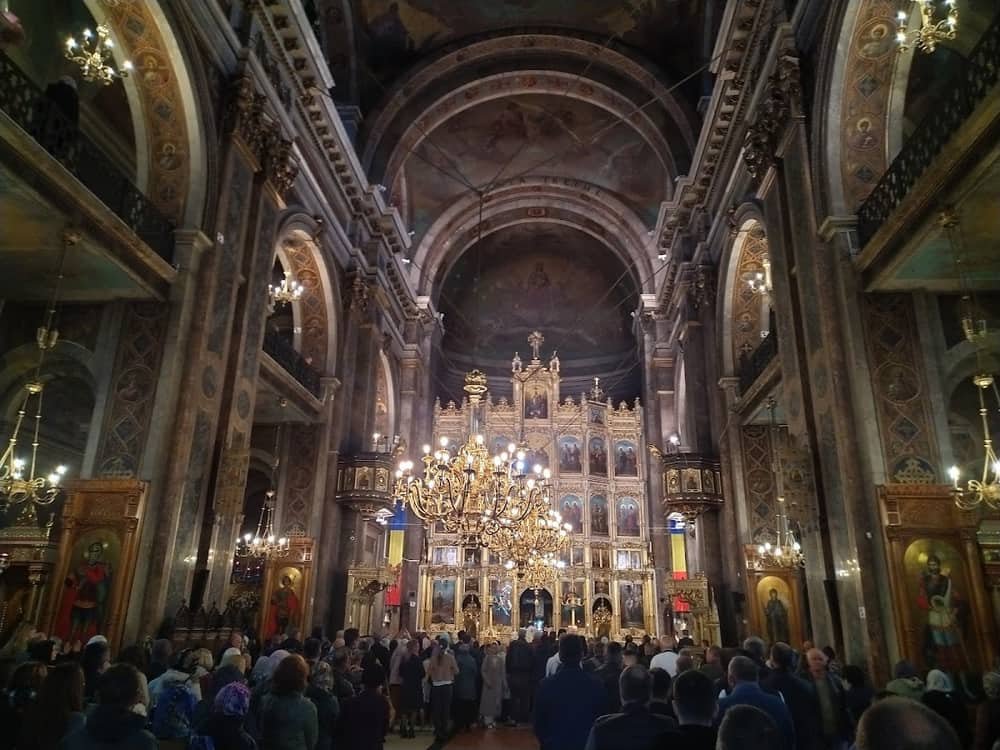
The cathedral — 1833–1887, with a two-decade interruption after the central vault collapsed in 1857. Consecrated on 23 April 1887 in the presence of King Carol I. The painting and the iconostasis with over 250 figures are by Gheorghe Tattarescu.
Since 1889 it has held the relics of Saint Parascheva.
The eastern part — towards lunch
4. Golia
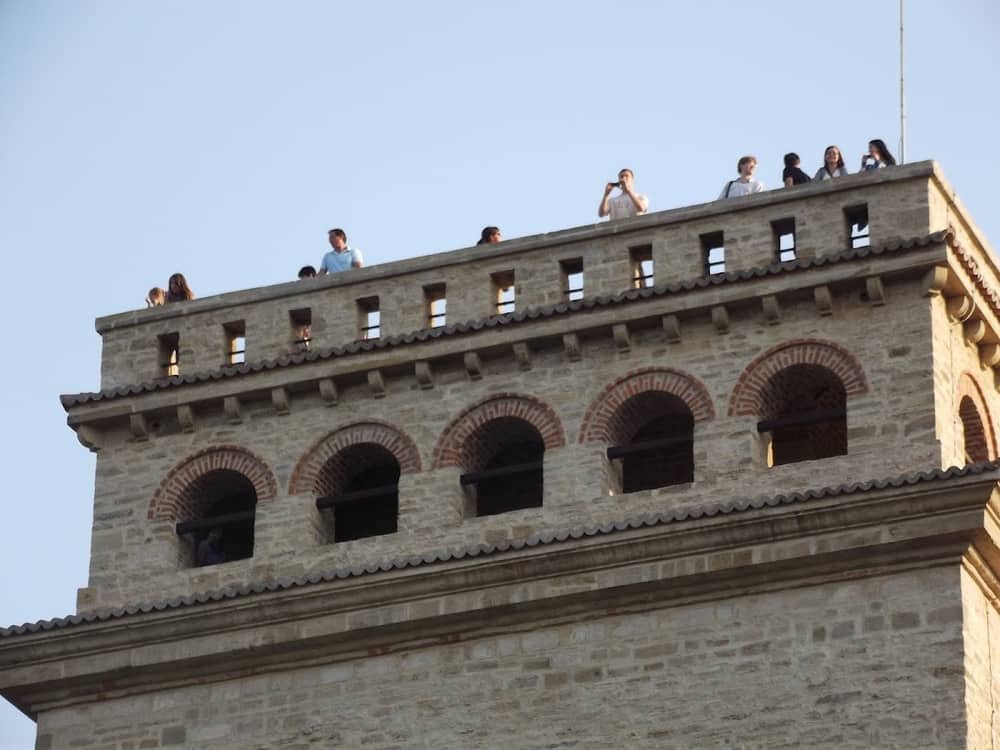
Golia Monastery, in Târgu Cucu, 15 minutes east. Climb the tower — it is around 30 metres and the whole centre is visible from the top. The enclosure is a fortress in full, with thick walls and corner towers.
In the same area is the Great Synagogue, one of the oldest buildings of its kind left in Romania.
The hills — afternoon
From here on you need transport. These are real climbs — many people take a taxi up and walk down. Check routes on the CTP page.
5. Cetățuia
Cetățuia Monastery, on the hill of the same name, to the south. A seventeenth-century fortified enclosure with walls and a tower. It has the best view over Iași — if you pick a single hill, pick this one, and go towards sunset.
6. Galata
Galata Monastery, on the western hill. A sixteenth-century foundation with a curtain wall and bell tower, dominating the Bahlui valley.
7. Frumoasa
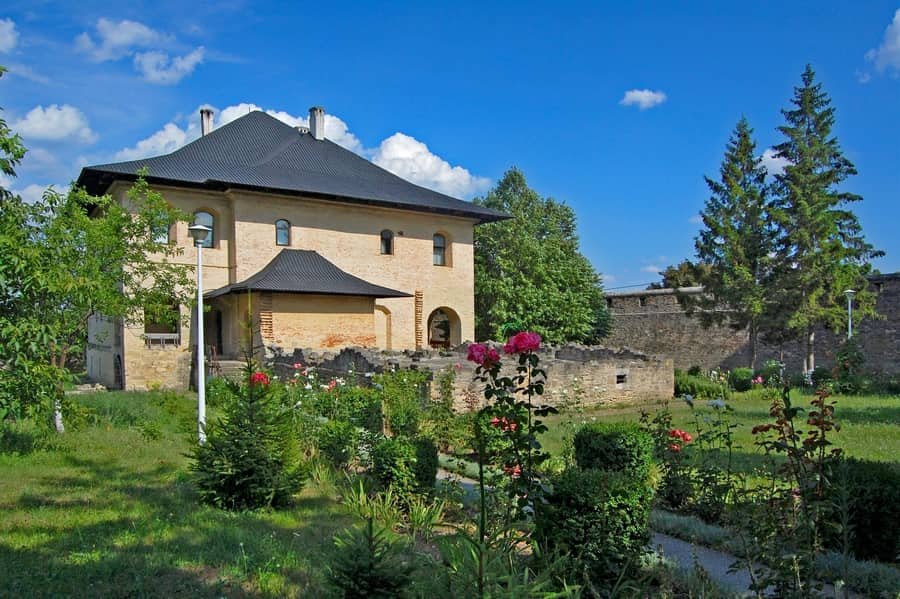
Frumoasa Monastery, to the south, towards Nicolina. A monastic ensemble with a princely palace, in a setting less trafficked than the others — which, for a visitor, is rather an advantage.
The 14 October pilgrimage
On the feast of Saint Parascheva, Iași becomes the destination of the largest pilgrimage in Romania. Hundreds of thousands of people, queues that can stretch for kilometres, with waits of over twenty hours.
If you are coming for the pilgrimage, book accommodation months ahead. If you are not, avoid the first half of October: the centre is closed off, transport diverted and accommodation sold out.
Practical
- Mind the dress code. Shoulders and knees covered; some monasteries ask women to cover their heads.
- Photography inside may be restricted. Ask.
- Hours change seasonally. Check before setting out.
- A CTP ticket costs 4 lei, valid 120 minutes — enough for one leg of the route.
How long it really takes
The full route — the three central ones, Golia, plus two hills — is a full day with a lunch break. If you only have half a day, what works is: Trei Ierarhi, St Nicholas the Princely, the Metropolitan Cathedral, all central and minutes apart on foot.
The hills need transport and energy. Do not try to fit all three into one afternoon — pick one, and pick Cetățuia if you want the view.
How this differs from Bukovina
Many visitors compare automatically. The difference is of type, not quality: the Bukovina monasteries are famous for their exterior frescoes, painted across the outside walls. Those in Iași are fortified — curtain walls, corner towers, tall belfries — because they were in the capital, and therefore on the front line.
The exception is Trei Ierarhi, where the façade is covered entirely in carved stone rather than paint. It is a decorative solution found nowhere else in Romanian Orthodox architecture.
Bukovina can be done as a day trip from Iași, by car.
A note about the pilgrimage
If you arrive in Iași around 14 October without knowing about the pilgrimage, this route becomes impractical: the Metropolitan Cathedral is the centre of an event with hundreds of thousands of participants, and the city centre is closed off.
That is not a reason to avoid the city — it is a reason to check the calendar before booking.
In short
- In the centre: Trei Ierarhi, St Nicholas the Princely, the Metropolitan Cathedral — minutes apart on foot.
- To the east: Golia, in Târgu Cucu — climb the roughly 30-metre tower.
- On the hills: Cetățuia (the best view), Galata, Frumoasa — these need transport.
- Why they are fortified: Iași was the Moldavian capital from 1564, and therefore a military target.
- Trei Ierarhi has its façade covered entirely in carved stone — an almost unique case.
- Dress code: shoulders and knees covered; in some monasteries, a headscarf for women.
- Avoid 14 October unless you are coming for the pilgrimage: the cathedral is the centre of a mass event.
Frequently asked questions
How many fortified monasteries does Iași have?
The main four are Cetățuia, Galata, Frumoasa and Golia. All have curtain walls and towers, built in the sixteenth and seventeenth centuries, when the city was the capital of Moldavia.
Why are the monasteries in Iași fortified?
Because the city was the Moldavian capital from 1564 and therefore a military target. The hilltop monasteries served as refuges and lookout points, not merely as places of worship.
Which monastery has the best view?
Cetățuia, on the southern hill. Worth the climb for the view alone, especially towards sunset.
Can you climb the Golia tower?
Yes. The tower is around 30 metres and offers a view over the centre. Check the hours before visiting.
When is the Iași pilgrimage?
On 14 October, the feast of Saint Parascheva, whose relics have been in the Metropolitan Cathedral since 1889. It is the largest pilgrimage in Romania.