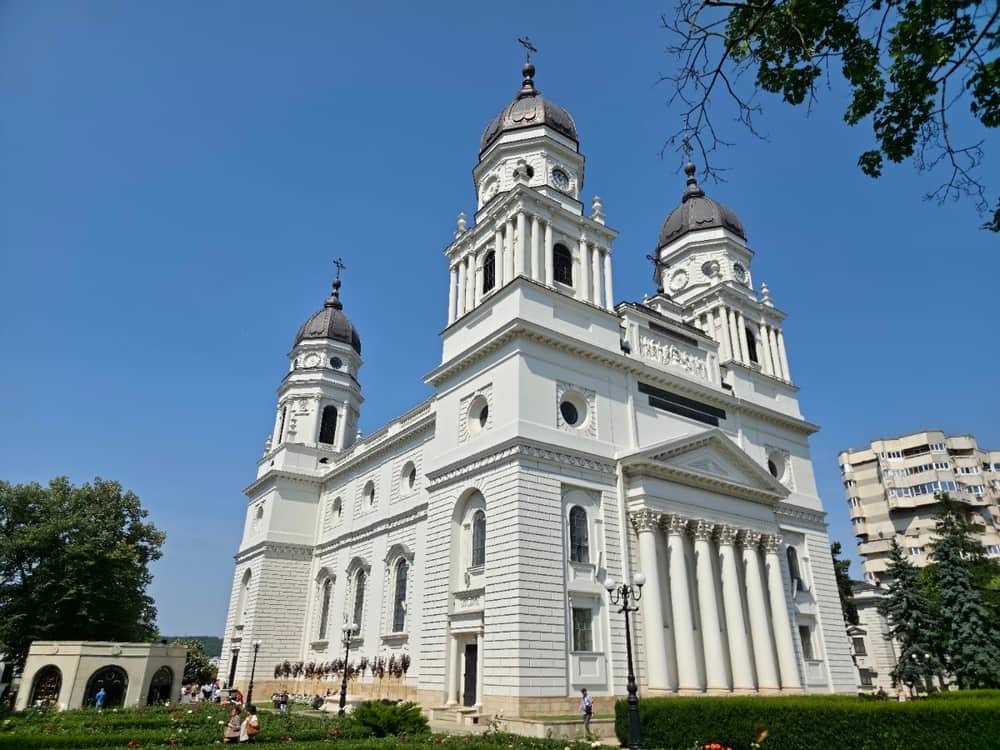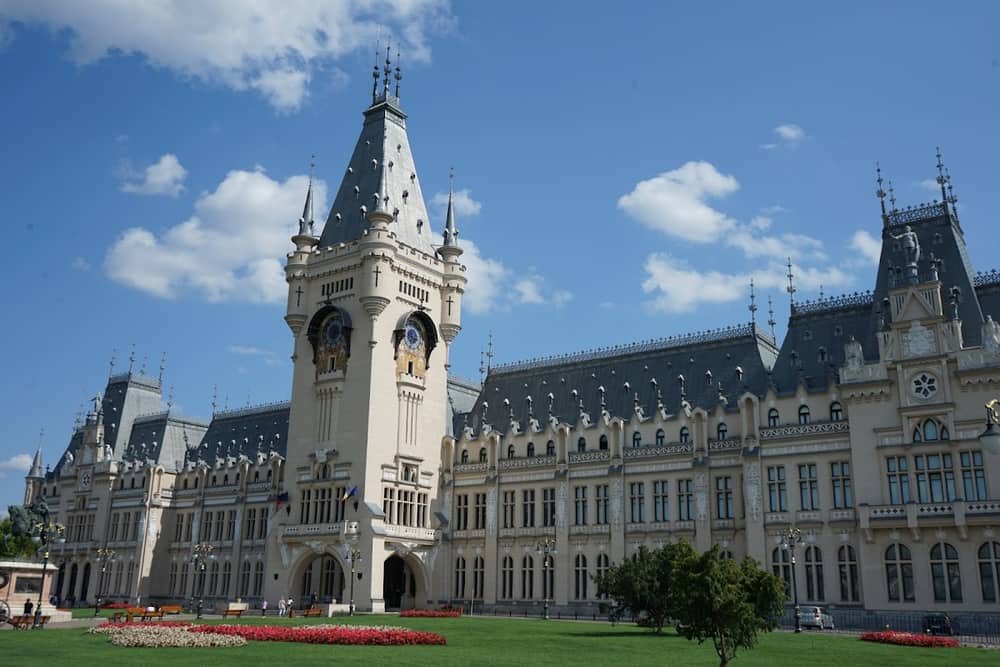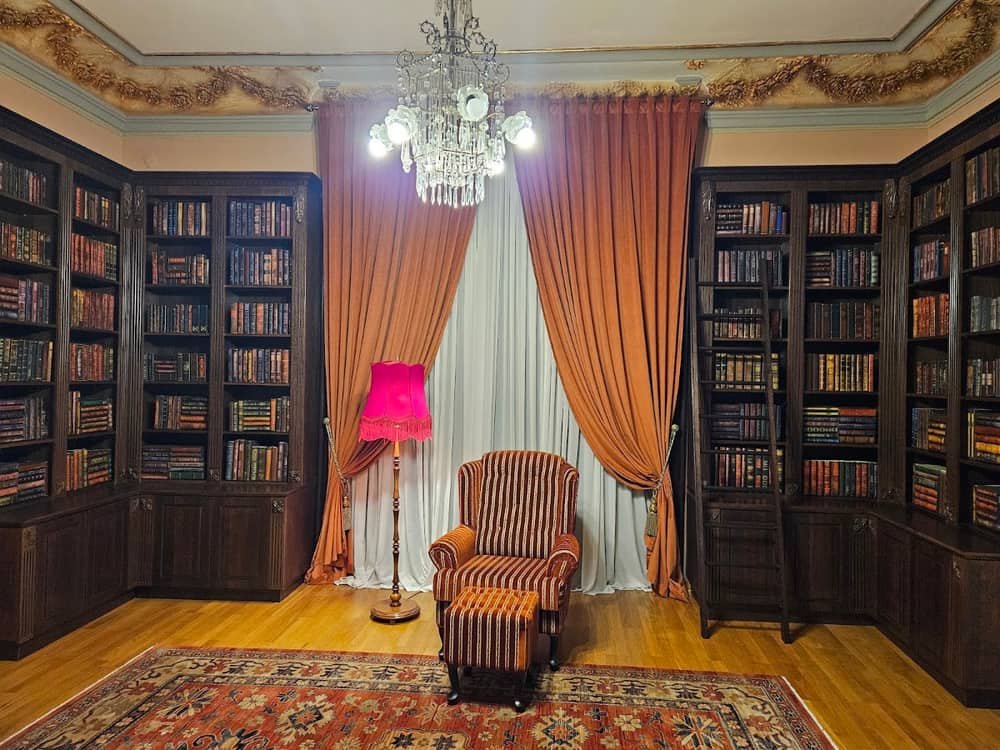
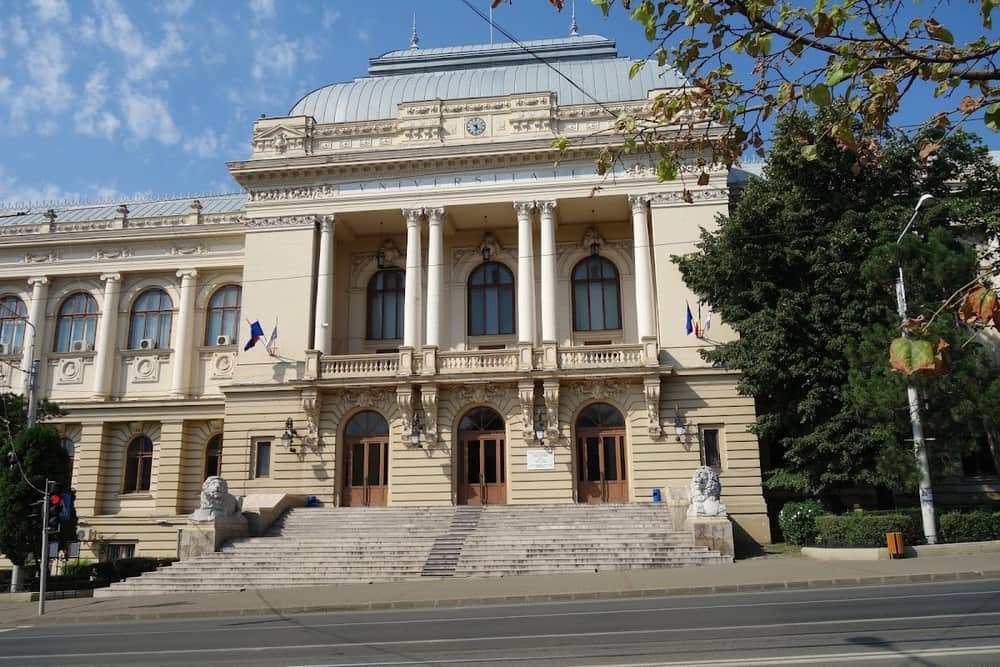
There are cities with universities and there are university cities. Iași is the second kind: here the academic calendar dictates rent prices, terrace hours and how crowded the tram is at eight in the morning.
Why here
After the Moldavian capital moved permanently to Bucharest in 1862, Iași was compensated with institutions. "Alexandru Ioan Cuza" University, founded in 1860, is Romania's first modern university — two years ahead of Bucharest's. It was not an accident but a political decision: a city that had lost its administration had to be given something else.
A century and a half later, that is still the city's main industry.
The five state universities
- "Alexandru Ioan Cuza" University (UAIC) — 1860. Over 24,000 students and around 800 academic staff in the 2022–2023 academic year. The main building in Copou, with its Hall of the Lost Footsteps, is itself a sight.
- "Grigore T. Popa" University of Medicine and Pharmacy — with roots in 1879, around 10,400 students, and a large international student community.
- "Gheorghe Asachi" Technical University (TUIASI) — the city's polytechnic; the main supplier of graduates to the local IT industry.
- "Ion Ionescu de la Brad" University of Life Sciences — agronomy, horticulture and veterinary medicine, with teaching farms and greenhouses around the city.
- "George Enescu" National University of Arts — music, theatre and visual arts.
Together, more than 60,000 students — making Iași Romania's third education and research centre.
The page with details, addresses and official sites: universities in Iași.
Copou: the campus quarter
Copou is the hill onto which the city's academic life effectively moved. Within a perimeter you can cross on foot you will find:
- the main UAIC building;
- the halls of residence;
- the "Anastasie Fătu" Botanical Garden, Romania's first (1856);
- Copou Garden, the country's oldest landscaped public park, with Eminescu's linden tree;
- the Vasile Pogor Museum, the house where Junimea met.
Tram line 1 links Copou with the centre and on to Podu Roș and Tătărași.
How it actually feels
The rhythm of the year
The city has two speeds. From October to May it is full: terraces, concerts, queues at cafés, crowded trams. In July and August it visibly empties — the best time to visit for quiet, the worst for atmosphere.
Rents
Demand explodes in September and collapses in June. Anyone looking for a long-term flat has the best negotiating position in summer.
Transport
Pupils and students up to 26 in accredited pre-university education get a free 30-day CTP pass. Everyone else pays 4 lei per journey or 130 lei for a monthly pass. Detail on the transport page.
Evenings
The bar and club offer is calibrated to a student's wallet: many small venues, low prices, and hours that run late on weeknights — which in other cities only happens at weekends.
The legacy of Junimea
In 1863 the Junimea literary society was founded in Iași, and it would go on to shape the canon of Romanian literature. It met in Vasile Pogor's house. Titu Maiorescu, Mihai Eminescu, Ion Creangă and Ion Luca Caragiale all passed through it.
This is not a textbook footnote: half the city's memorial houses — Creangă's cottage in Ticău, the Mihai Eminescu Museum in Copou, Dosoftei's House — exist because the city was, for a while, the country's literary centre. See also notable figures of Iași.
What it means for a visitor who is not a student
More than it seems. The presence of over 60,000 students concretely changes the experience of anyone coming to the city:
- Food and drink prices are calibrated to a small budget — noticeably below Bucharest and Cluj.
- Venue hours run late including on weeknights, which in other cities only happens on Fridays and Saturdays.
- The cultural offer is denser during the academic year; student concerts at the University of Arts are cheap or free.
- Crowding on the tram at 8 a.m. and 4 p.m. is real, for the same reason.
The flip side: in July and August the city empties. It is the best time for museums and the worst for atmosphere.
Why Copou, and not somewhere else
The university was built on the hill for a practical nineteenth-century reason: the land was available, the air better, and distance from the crowded centre was considered an advantage for study. The same logic brought the Botanical Garden there in 1856.
The result is a compact campus quarter where halls of residence, lecture rooms, parks and student venues are all within walking distance. Detail in the quarter guide.
The effect on rents
Demand explodes in September and collapses in June. For anyone looking for a flat, that means summer gives you the best negotiating position — information worth a few hundred lei a month. See the guide for new residents.
In short
- Five state universities, over 60,000 students — roughly one student to four residents.
- UAIC, 1860 — Romania's first modern university. Over 24,000 students (2022–2023).
- Copou is the campus quarter: university, halls, the Botanical Garden and Copou Garden.
- Junimea, 1863 — the circle that fixed the literary canon, in Vasile Pogor's house.
- The city's rhythm follows the academic year: full October to May, empty in summer.
- Rents explode in September and collapse in June — summer is the best time to negotiate.
- Pupils and students up to 26 in accredited pre-university education get a free CTP pass.
Frequently asked questions
Which is the oldest university in Romania?
"Alexandru Ioan Cuza" University in Iași, founded in 1860 — Romania's first modern university, two years ahead of Bucharest's.
How many students are there in Iași?
More than 60,000, at five state universities, making the city Romania's third education and research centre.
Can you visit the main university building?
The main UAIC building in Copou is a city landmark, and the Hall of the Lost Footsteps can usually be visited. Access depends on the academic calendar and on events, though — check with the university before making a special trip.
Do students travel free in Iași?
Pupils and students up to 26 in accredited pre-university education get a free 30-day CTP pass. For everyone else a ticket is 4 lei and a monthly pass 130 lei.
When is the city liveliest?
From October to May, during the academic year. In summer, once the students leave, the pace drops noticeably.