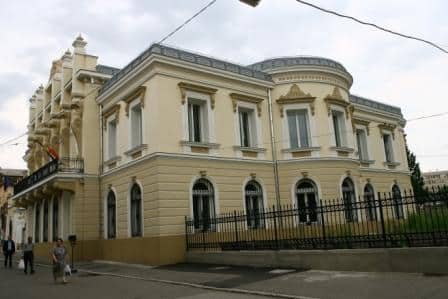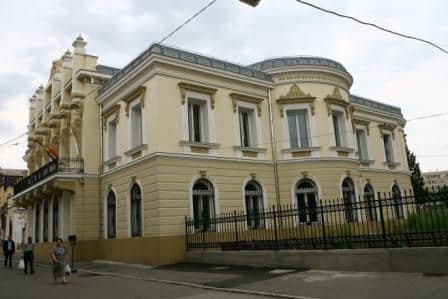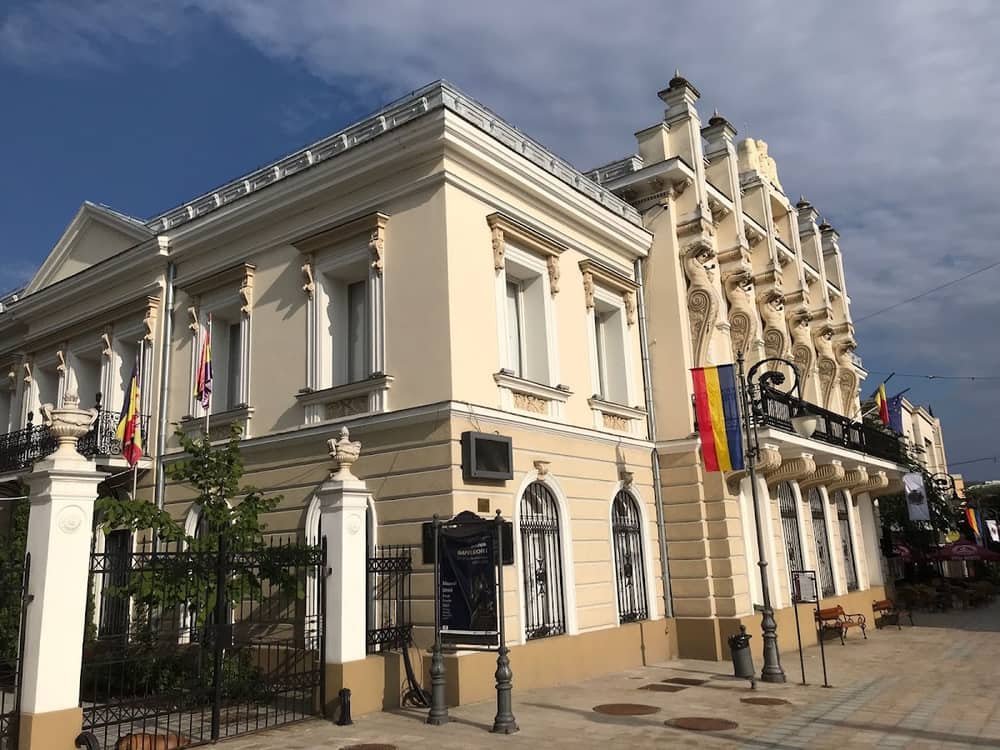
The history of Iași is not a straight line but a succession of periods in which the city was either the absolute centre of a country or a provincial capital trading on its own institutions to stay relevant. Most of the buildings you see today come from the former.
1408: the first mention
The city's name first appears in a document dated 6 October 1408, a commercial privilege granted by Alexandru cel Bun to the merchants of Lviv. Iași figures there as a customs point on the trade road linking Poland to the Black Sea. It is not a founding charter — it is proof that the settlement already existed and mattered enough to be taxed.
The princely court in Iași is documented from 1434. Over it, after several reconstructions and a neoclassical palace built in 1804–1806, the Palace of Culture would rise in the early twentieth century.
1564: the capital moves from Suceava
Alexandru Lăpușneanu moved the Moldavian capital from Suceava to Iași. The reasons were practical — a more central position within the remaining territory, proximity to the trade roads — but the effect was cultural: for almost three centuries, everything important built in Moldavia was built here.
The age of Vasile Lupu (1634–1653)
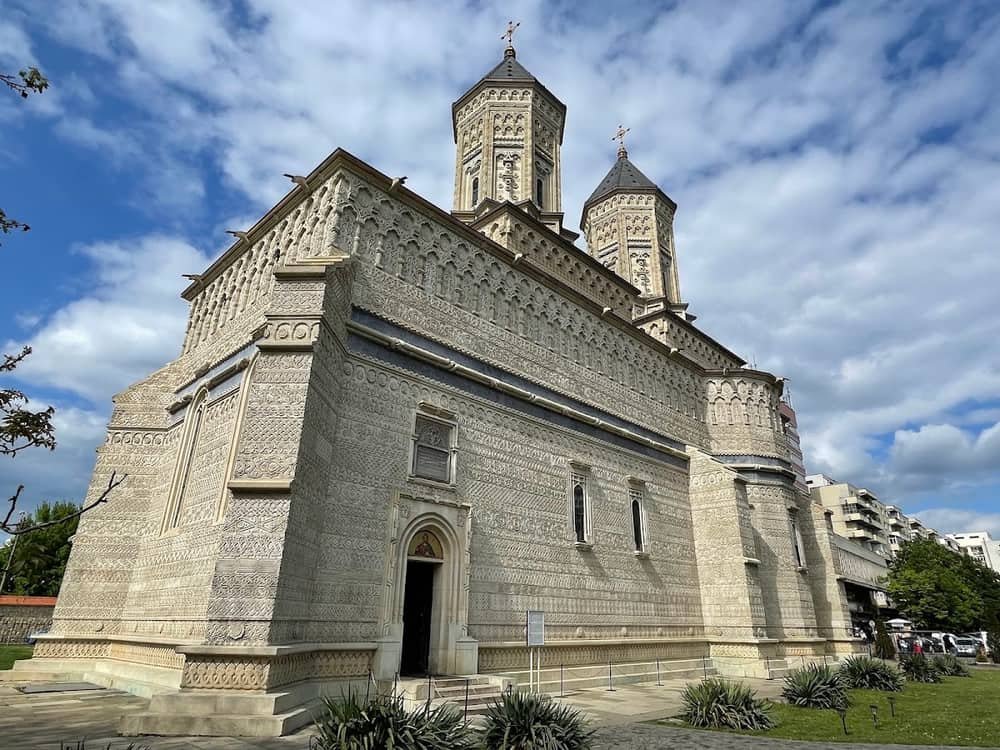
The high point of the medieval city. Vasile Lupu founded Trei Ierarhi Monastery, whose façade is covered entirely in carved stone — a rarity in Orthodox architecture. In 1641 he also brought the relics of Saint Parascheva to Moldavia, along with the first printing press: in 1643 *Varlaam's Homiliary* appeared here, the first book printed in Romanian on Moldavian soil.
The fortified hilltop monasteries — Galata, Cetățuia, Frumoasa, Golia — date from the same sixteenth and seventeenth centuries. They were not only places of worship but refuges and lookout points.
1859: the city of the Union
On 5 January 1859 the elective assembly of Moldavia chose Alexandru Ioan Cuza as its ruler. On 24 January, Wallachia made the same choice — an ingenious answer to the great powers' ban on the two principalities sharing a single ruler. Between 1859 and 1862, Iași and Bucharest were both capitals of the United Principalities.
From 1862 the capital remained in Bucharest alone. Iași lost the administration and received institutions instead: the University (1860, Romania's first modern university), the National Theatre (founded 1840, the country's first), the Botanical Garden (1856, Romania's first). The cultural compensation became the city's identity.
Junimea
In 1863 the Junimea society was founded in Iași, the most influential literary circle in the history of Romanian culture. It met in Vasile Pogor's house — now a museum. Titu Maiorescu, Mihai Eminescu, Ion Creangă and Ion Luca Caragiale all passed through it.
1916–1918: capital of Romania
The autumn of 1916 brought the occupation of Bucharest by the Central Powers. The government, parliament, royal family and state treasury moved to Iași. The city, which then had fewer than 80,000 inhabitants, took in more than 100,000 refugees. A winter of typhus and famine followed, with thousands of deaths.
It was also here, in 1917, that the decision on land and electoral reform was taken — the promise made to soldiers in the trenches that would reshape the social structure of interwar Romania.
27–29 June 1941: the pogrom
In the last days of June 1941 one of the worst pogroms in Europe took place in Iași. Approximately 13,266 Jews were killed — shot in the city, in the courtyard of the police headquarters, or asphyxiated in the "death trains" that carried them for days in sealed wagons.
Before the war, Jews formed a substantial part of the population of Iași; the city had dozens of synagogues. Today the Great Synagogue still stands, one of the oldest buildings of its kind in Romania. The pogrom is not a footnote in the city's history — it is the moment its composition changed for good.
After 1945
The communist period brought forced industrialisation and the housing districts where most of the city still lives: Nicolina, Alexandru cel Bun, Dacia, Tătărași. The population multiplied several times over in three decades.
After 1989 heavy industry contracted and the city fell back on what it already had: universities, hospitals and, from the 2000s, IT. See the economy of Iași for the present picture.
What each era left on the ground
The history of Iași is not read only in textbooks but in buildings, and every layer is locatable:
- 15th–17th centuries, the capital. St Nicholas the Princely, founded by Stephen the Great; Trei Ierarhi, Vasile Lupu's foundation; the ring of fortified hilltop monasteries.
- 19th century, the compensation. The Metropolitan Cathedral (1833–1887), the University (1860), the National Theatre (1840), the Botanical Garden (1856).
- Early 20th century. The Palace of Culture, 1906–1925, neo-Gothic, on the site of the princely court.
- After 1945. The housing quarters: Nicolina, Alexandru cel Bun, Dacia, Tătărași.
- The last decade. The Palas development, below the Palace of Culture.
Five layers, five architectural registers, all visible in a day on foot. The detailed guide is in the architecture of Iași.
A note on memory
The June 1941 pogrom is not a parenthesis in the city's history. The Jewish community of Iași had been among the largest in Romania, with dozens of synagogues. After 1941 it never recovered, and the Great Synagogue is what remains functional of it.
We mention this explicitly because a travel guide that skips the moment a city's composition changed for good is not describing the city but a convenient version of it.
Frequently asked questions
When was Iași first documented?
On 6 October 1408, in a commercial privilege issued by Alexandru cel Bun, where the city appears as a customs point. The settlement existed before then — the document records it, it does not found it.
Why did the Moldavian capital move to Iași?
In 1564 Alexandru Lăpușneanu moved the court from Suceava to Iași on positional grounds: the city was more central to the Moldavia of the day and closer to the trade roads.
What happened in Iași in 1859?
On 5 January 1859 the elective assembly of Moldavia chose Alexandru Ioan Cuza as its ruler. The identical choice made in Bucharest on 24 January produced the de facto union of the Principalities.
Was Iași ever the capital of Romania?
Yes, between 1916 and 1918, after Bucharest fell under German occupation. The government, parliament, royal court and treasury all operated from here.
What was the Iași pogrom?
A massacre carried out between 27 and 29 June 1941, in which approximately 13,266 Jews were killed in the city and in the "death trains". It is one of the worst pogroms in Europe during the Second World War.