There is a key without which Iași cannot be understood: the city lost the capital in 1862 and was given cultural institutions in compensation. Everything that is "the first in Romania" here comes from that political bargain. And the consequence is that, unlike other large cities, culture is not an add-on to the economy — for a while, it *was* the economy.
The list of "firsts"
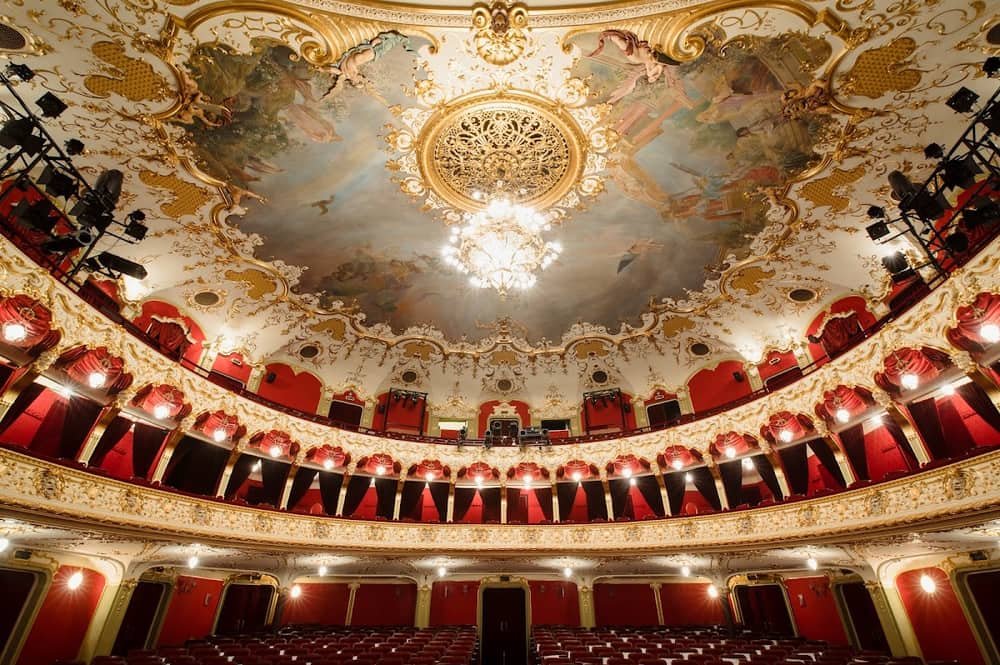
- The National Theatre — 1840, Romania's first. Founded by Costache Negruzzi, Vasile Alecsandri and Mihail Kogălniceanu. → The "Vasile Alecsandri" National Theatre
- The Botanical Garden — 1856, the country's first. → The "Anastasie Fătu" Botanical Garden
- The University — 1860, Romania's first modern university. → Iași as a university city
- Copou Garden — 1833–1834, the country's oldest landscaped public park. → Copou Garden
- The first memorial house — Ion Creangă's Bojdeuca, opened to the public in 1918.
- The first book printed in Romanian in Moldavia — *Varlaam's Homiliary*, 1643, from the press at Trei Ierarhi.
Junimea
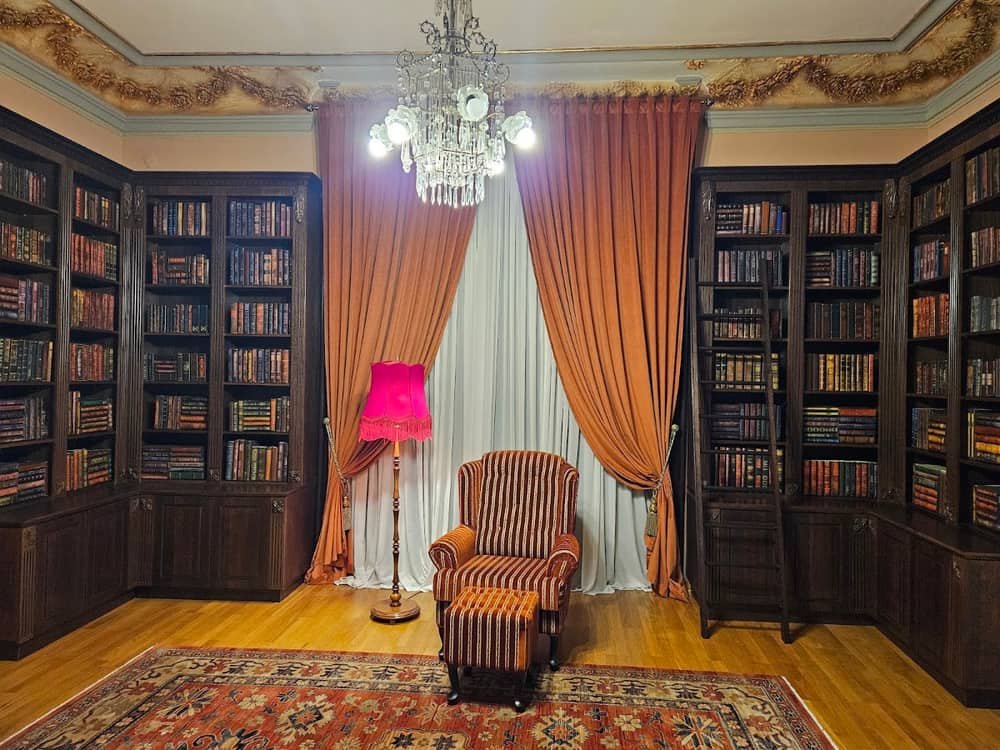
In 1863 the Junimea literary society was founded in Iași, the most influential in the history of Romanian culture. It met in Vasile Pogor's house — now a museum. Titu Maiorescu, Mihai Eminescu, Ion Creangă and Ion Luca Caragiale all passed through it.
Junimea was not merely a literary circle. It was the mechanism through which the canon of modern Romanian literature was fixed and a critical direction imposed — "forms without substance" is the Maiorescu formula that defined Romanian cultural debate for a century.
See also notable figures of Iași.
The museums
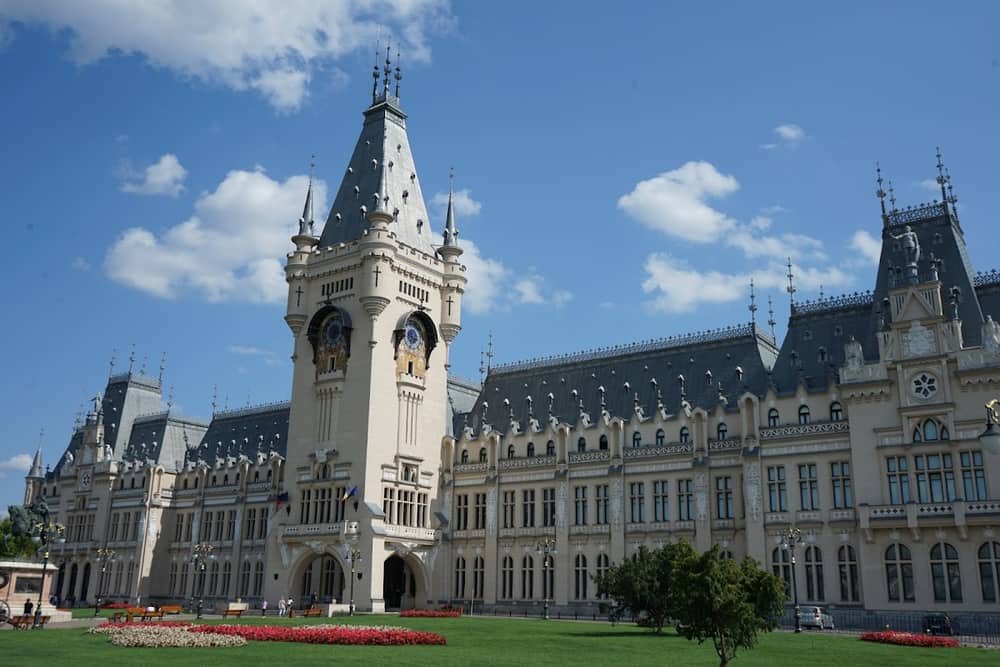
Iași has an unusual density of museums for its size. The main node is the Palace of Culture, which houses four museums under one roof, within the "Moldova" National Museum Complex:
- The Museum of Moldavian History
- The Ethnographic Museum of Moldavia
- The Art Museum
- The "Ștefan Procopiu" Science and Technology Museum
Beyond it: the Union Museum, the Natural History Museum, Dosoftei's House — a museum of old Romanian literature — the Mihai Eminescu Museum, the Poni-Cernătescu Museum, the "Queen Marie" Municipal Museum.
What keeps culture alive today
The universities
With over 60,000 students, they produce the audience as well as the artists. The "George Enescu" National University of Arts trains musicians, actors and visual artists, and student concerts and productions are among the best reasons to go out during term time.
The religious calendar
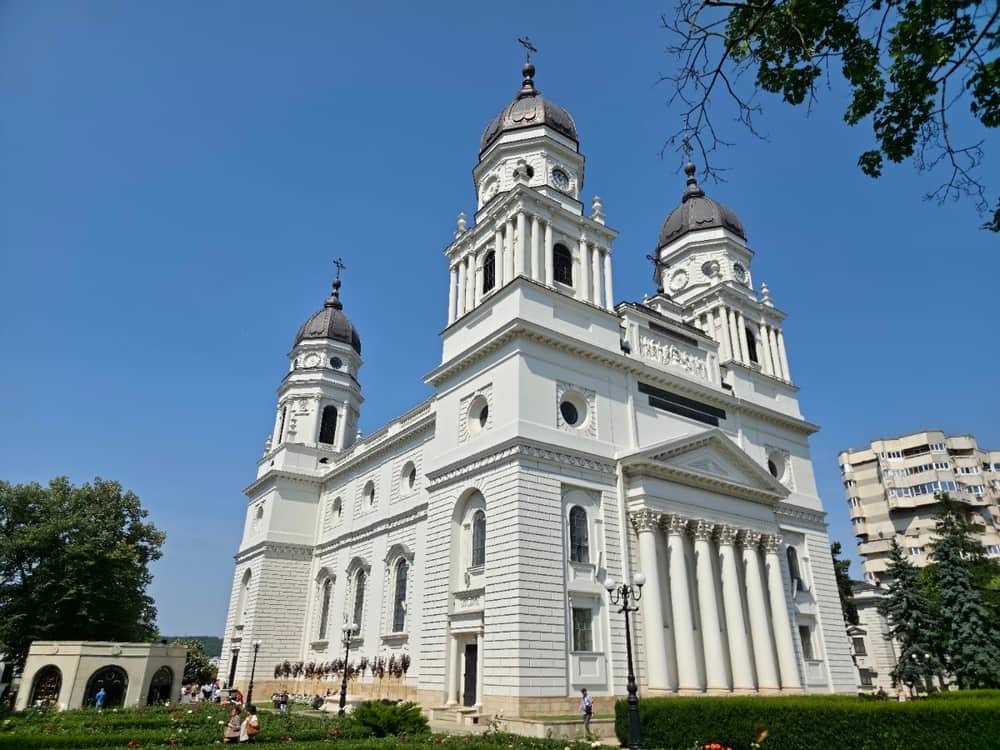
14 October, the feast of Saint Parascheva, is the city's largest mass event — hundreds of thousands of pilgrims. It is a religious occasion, but its urban effect is total: transport, accommodation, retail. See churches and monasteries.
The student rhythm
The city has two speeds: full from October to May, empty in July and August. The cultural calendar follows exactly that pattern.
Identity, in short
Iași defines itself by three things, in the order you will hear them from locals: that it was the capital of Moldavia, that it has the country's first university, and that it is the city of the Union. All three are true and all three refer to the past — which is, at the same time, the city's strength and its problem.
Maiorescu's formula, briefly
"Forms without substance" is the phrase that came out of Junimea and defined Romanian cultural debate for a century. Titu Maiorescu used it to criticise the hasty import of Western institutions into a society that had not yet built their foundations — universities without research, academies without scholars, empty forms.
It is ironic and fitting that the formula was born in precisely the city that had received institutions as political compensation. Iași is simultaneously the example and the critique of the phenomenon.
Where culture is visible, concretely
Not in declarations but in the city's time budget:
- The seasons of the National Theatre and the Athenaeum run from autumn to summer, exactly like the academic year.
- Student concerts at the University of Arts are cheap or free and make up a good share of the real evening offer.
- Temporary exhibitions at the Palace of Culture sit on top of the four permanent museums.
And over all of it, 14 October — a religious event with total urban effect, bringing hundreds of thousands of people and completely changing how the city works for a week.
What "an identity built on the past" means
Iași describes itself through three things: former capital, first university, city of the Union. All three are true and all three are in the past tense.
It is at once the city's strength and its problem. A strength, because the heritage is real, verifiable and hard to dispute. A problem, because a city that defines itself exclusively by what it was risks stopping building. What has happened over the last two decades — IT, the Palas development, the regional hospitals — suggests a second answer.
In short
- The National Theatre, 1840 — Romania's first. The Botanical Garden, 1856 — the country's first.
- The University, 1860 — Romania's first modern university.
- Junimea, 1863 — the most influential circle in Romanian culture, in Vasile Pogor's house.
- The Palace of Culture houses four museums under the "Moldova" National Museum Complex.
- All of it came as compensation for the loss of capital status in 1862.
- The cultural rhythm follows the academic year: full October to May, thin in summer.
- 14 October is the city's largest mass event, with total urban effect.
Frequently asked questions
Why does Iași have so many "first in Romania" institutions?
Because after losing capital status in 1862 the city was deliberately compensated with cultural institutions: the university, the theatre, the botanical garden. It was a political decision, not a coincidence.
What was Junimea?
The literary society founded in Iași in 1863, the most influential in Romanian culture. It met in Vasile Pogor's house and counted Titu Maiorescu, Mihai Eminescu, Ion Creangă and Ion Luca Caragiale among those who passed through.
Which is the oldest theatre in Romania?
The National Theatre of Iași, founded in 1840 by Costache Negruzzi, Vasile Alecsandri and Mihail Kogălniceanu.
How many museums are in the Palace of Culture?
Four: the Museum of Moldavian History, the Ethnographic Museum of Moldavia, the Art Museum and the "Ștefan Procopiu" Science and Technology Museum, all under the "Moldova" National Museum Complex.
When is Iași liveliest culturally?
During the academic year, October to May. In summer, once the students leave, the programme thins out considerably.