"Capital of Moldavia" is the phrase you hear most often about Iași, and it is also the most often misunderstood. It is worth clearing up, because it explains half of what you see in the city.
Which Moldavia are we talking about
The title refers to the Principality of Moldavia, the medieval state that existed from the fourteenth century until the union with Wallachia in 1859. That principality covered today's Romanian Moldavia, Bukovina and Bessarabia.
It does not refer to the Republic of Moldova, an independent state since 1991 with its capital in Chișinău. Iași sits about 20 kilometres from the border between the two — hence both the confusion and the very real links between them.
As a historical region of Romania, Moldavia has no administrative capital today. "Capital of Moldavia" is therefore a cultural title: Iași is the region's largest city and the one that housed its institutions.
1564–1859: the real capital
The Moldavian capital was at Suceava until 1564, when Alexandru Lăpușneanu moved the princely court to Iași. The reason was geographic and commercial: after the territorial losses of that century Suceava had become peripheral, while Iași sat better on the roads linking Poland to the Black Sea.
What capital status left behind, concretely:
- The princely court, documented from 1434 and greatly extended after 1564. The Palace of Culture stands on its site today.
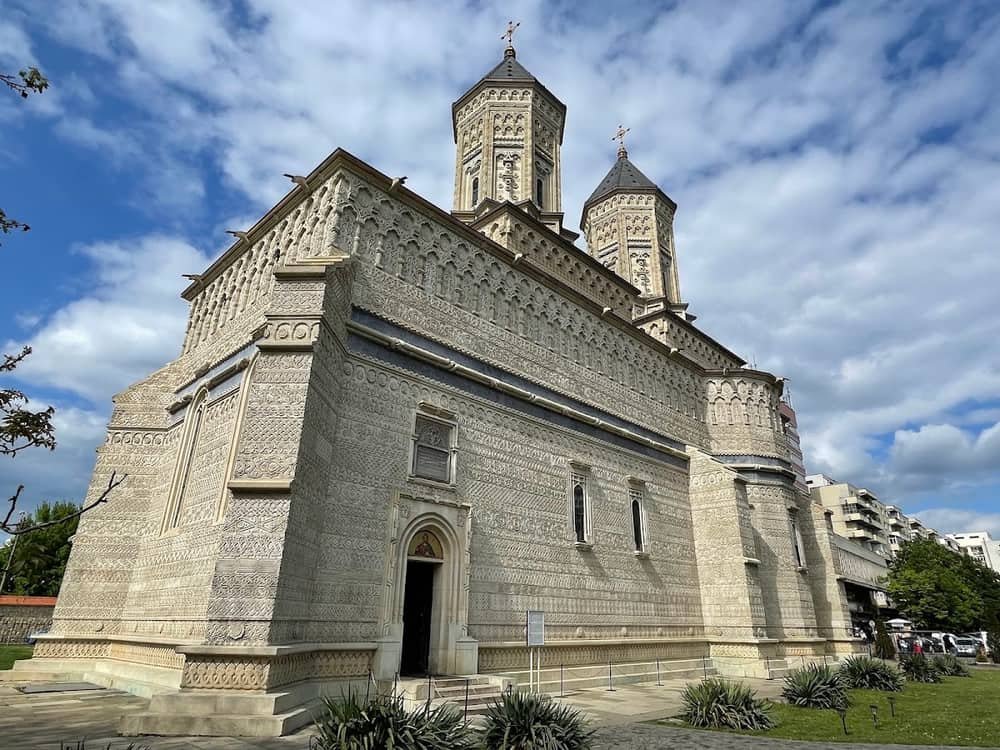
- Princely foundations: Trei Ierarhi (Vasile Lupu), Golia, and St Nicholas the Princely Church — the last founded by Stephen the Great.
- A ring of fortified monasteries on the hills: Galata, Cetățuia, Frumoasa. They had walls, towers and a military role.
- Moldavia's first printing press, brought by Vasile Lupu; from it came *Varlaam's Homiliary* in 1643.
1859–1862: a shared capital
The election of Alexandru Ioan Cuza as ruler of Moldavia on 5 January 1859, followed by his election in Wallachia on 24 January, produced the de facto union of the two principalities. For three years the resulting state had two capitals, two governments and two assemblies — in Iași and Bucharest.
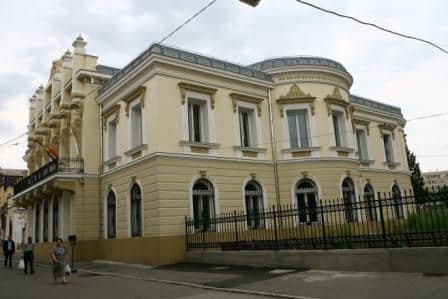
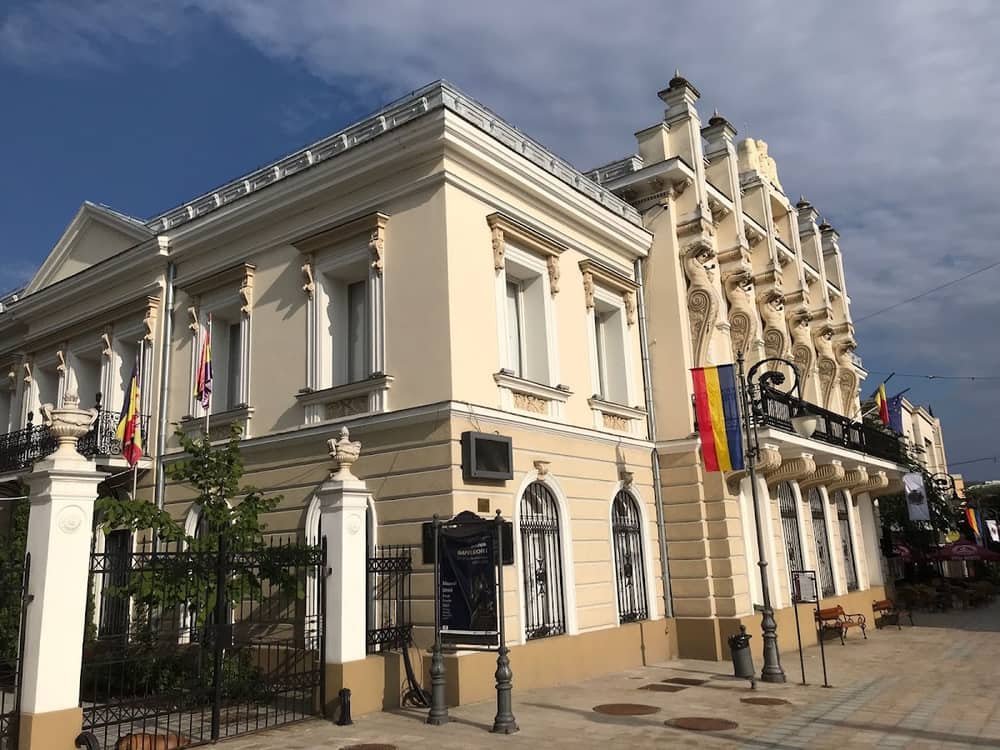
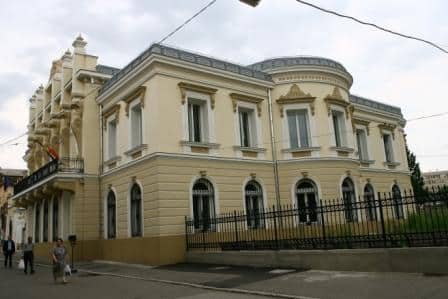
The moment is documented in the Union Museum, in the building that served as Cuza's residence.
From 1862 the institutions were unified in Bucharest. Iași lost the entire state apparatus within a year.
The compensation: cultural institutions
The loss of the capital was followed by a deliberate strategy of compensation, and the result still defines the city:
- The National Theatre — founded 1840, Romania's first. See the "Vasile Alecsandri" National Theatre.
- The Botanical Garden — 1856, the country's first. It is now in Copou, named "Anastasie Fătu".
- The University — 1860, Romania's first modern university. Details in Iași as a university city.
- Junimea — 1863, the literary circle that shaped the Romanian canon.
This is the fundamental difference between Iași and Romania's other large cities: here the cultural institutions were not added on top of an industrial town — they were the reason the town stayed important.
1916–1918: the second capital
The last time Iași was genuinely a capital was in the First World War, when Bucharest fell under German occupation. The government, parliament, royal family and treasury operated from here for two years. The detail is in the history of Iași.
Why the 1564 move mattered
Alexandru Lăpușneanu did not move the capital on a whim. Suceava had become peripheral to the Moldavia of the day after the century's territorial losses, while Iași sat far better on the trade roads linking Poland to the Black Sea — the same roads for which the city had been mentioned, in 1408, as a customs point.
The effect was cumulative: where the princely court sits, building happens, and where building happens, population, craft and commerce gather. Three centuries later, everything that mattered in Moldavia was in Iași.
What "capital" means for a building
The best example is the plot on which the Palace of Culture stands today. There was the princely court, documented from 1434. Over it a neoclassical palace was built in 1804–1806. Over that, between 1906 and 1925, rose the present neo-Gothic palace with its 298 rooms.
Three architectures, five centuries, the same piece of ground. It is the most concentrated form in which the continuity of function is visible in a Romanian city.
What happened to the title
After 1862, when the institutions were unified in Bucharest, "capital of Moldavia" remained a cultural title. It has no administrative content today: Moldavia is a historical region without its own status, and Iași is the seat of Iași county, no more.
What remained real is the infrastructure the title produced: the monasteries, the museums, the university, the theatre. See culture and identity in Iași.
In short
- 1564–1859: Iași was the capital of the Principality of Moldavia, moved from Suceava by Alexandru Lăpușneanu.
- It is not the capital of the Republic of Moldova — that is Chișinău, about 20 kilometres across the border.
- 1859–1862: Iași and Bucharest were simultaneously capitals of the United Principalities.
- 1916–1918: Iași was the capital of Romania, after Bucharest fell under German occupation.
- What the status left: the princely court, princely foundations, the ring of fortified monasteries, the first printing press.
- The compensation after 1862: the National Theatre, the Botanical Garden, the University, Junimea.
- Today the title is cultural, not administrative — Moldavia is a historical region without its own status.
Frequently asked questions
Is Iași the capital of the Republic of Moldova?
No. The capital of the Republic of Moldova is Chișinău. Iași was the capital of the Principality of Moldavia, a medieval Romanian state, between 1564 and 1859, and lies in Romania about 20 kilometres from the border.
What was the capital of Moldavia before Iași?
Suceava. The capital moved to Iași in 1564, under Alexandru Lăpușneanu.
Does Moldavia, as a region of Romania, have a capital today?
No, not administratively. Moldavia is a historical region without its own administrative status; Iași carries the title in a cultural sense, as its largest city.
Why are there so many fortified monasteries around Iași?
Because it was a capital, and therefore a target. The hilltop monasteries — Galata, Cetățuia, Frumoasa — had curtain walls, towers and served as refuges, not merely as places of worship.
Where can I see traces of the capital period?
Most densely in the centre: the Palace of Culture (on the site of the princely court), Trei Ierarhi, St Nicholas the Princely and the Union Museum are all within a few minutes' walk of each other.