A city chooses its symbols; it is not given them. Iași chose its own from two registers: lost power and won literature.
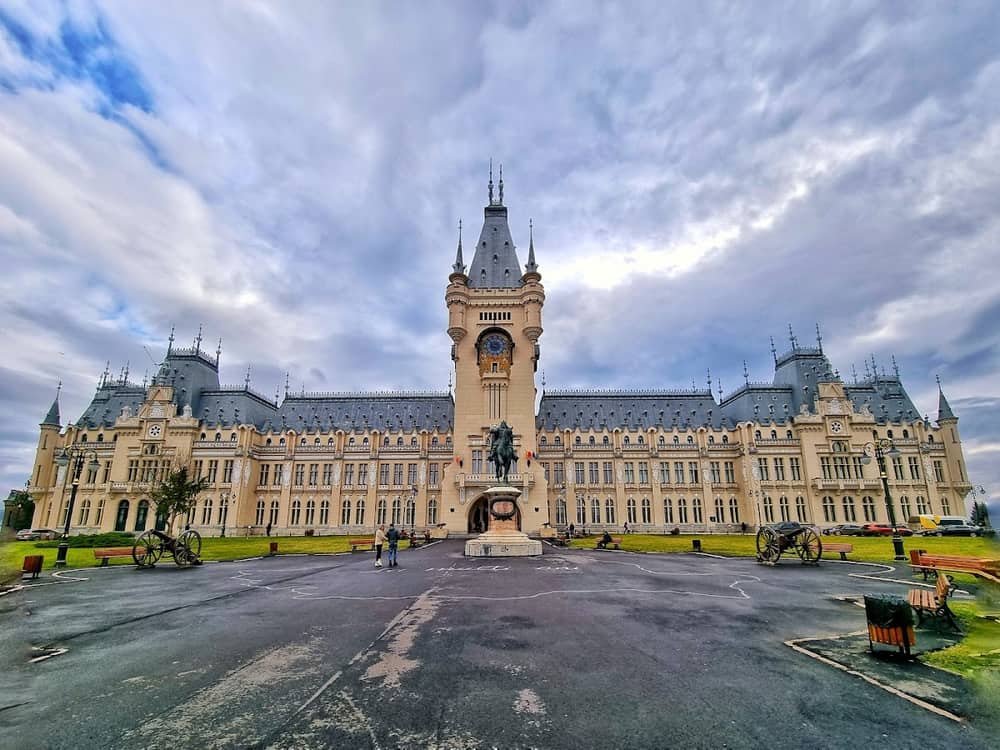
The Palace of Culture
The absolute symbol. It appears on logos, on postcards and in the mind of anyone who has heard of Iași. The reasons are concrete: it is the city's largest historic building, it stands on the site of the princely court, and it houses four museums.
The details that matter: 298 rooms, some 36,000 m², a clock with three faces of 3.25 metres and zodiac stained glass, eight bells that play *Hora Unirii* on every hour. Built between 1906 and 1925 by Ion D. Berindey.
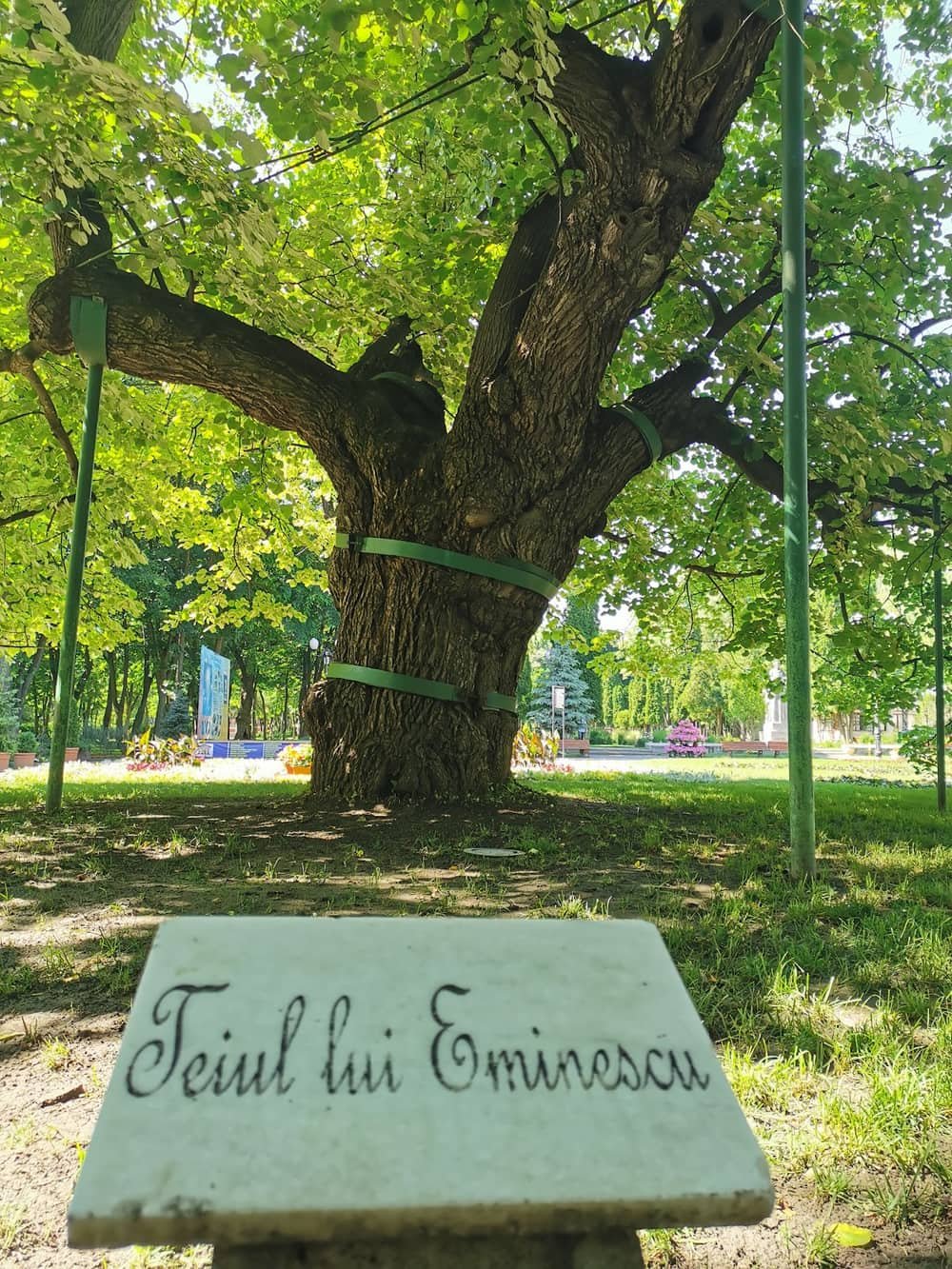
Eminescu's linden tree
Probably the best-known tree in Romania. It stands in Copou Garden, the country's oldest landscaped public park (1833–1834), and is tied to the period when Eminescu lived and worked in Iași.
It is a different kind of symbol from the Palace: not monumental but sentimental. And the fact that a city picks a tree as its symbol says something about how it sees itself.
The Obelisk with Lions
Also in Copou Garden. One of the oldest public monuments in Romania, with a recognisable silhouette that appears frequently in the city's iconography.
The Golia tower
The roughly 30-metre tower of Golia Monastery, in Târgu Cucu. It can be climbed, and from the top the whole centre is visible. It is the best visual landmark in the east of the city.
The façade of Trei Ierarhi
Not a separate monument but a detail that became a symbol: the façade covered entirely in carved stone of Trei Ierarhi Monastery, Vasile Lupu's foundation. Nothing like it exists elsewhere in Romanian Orthodox architecture.
The seven hills
A symbol that is not a building. Local tradition counts seven hills — Breazu, Bucium, Cetățuia, Copou, Galata, Repedea, Șorogari — and the reference to Rome is deliberate: the conceit of a former capital. The number is symbolic rather than strictly geographical, but the hills are real and they explain the shape of the city. See geography.
The relics of Saint Parascheva
The religious symbol of the city and of Moldavia. Brought to Moldavia in 1641 by Vasile Lupu, moved in 1889 from Trei Ierarhi to the Metropolitan Cathedral, where they remain. The 14 October pilgrimage is Romania's largest.
The university in Copou
The main building of "Alexandru Ioan Cuza" University, with its Hall of the Lost Footsteps, is the symbol of the city's status as the country's first university centre — 1860, two years ahead of Bucharest. See Iași as a university city.
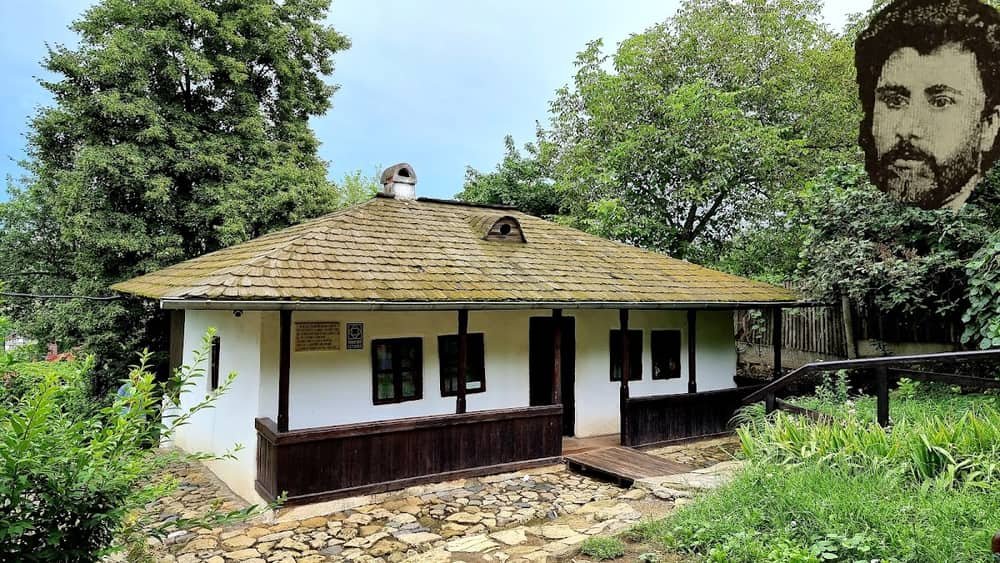
The Bojdeuca
A two-room cottage in Ticău where Ion Creangă lived. In 1918 it became Romania's first memorial house. It is anti-monumental by definition — and that is precisely why it works as the symbol of a culture built in modest houses rather than palaces.
How a city chooses its symbols
The list above has a logic worth making explicit: Iași chose its symbols from two opposite registers. On one side lost power — the Palace of Culture on the site of the princely court, the fortified monasteries, the relics that make the city the destination of the country's largest pilgrimage. On the other, won literature — a tree, a two-room cottage, a house where manuscripts were read aloud.
The fact that a city puts a tree next to a 298-room palace, in the same list of symbols, says more about it than any description.
What was lost
Some of the symbols of Iași no longer exist, or exist only in fragments. The Jewish community had dozens of synagogues before the Second World War; today the Great Synagogue is what remains functional. The princely court, documented from 1434, was replaced by a neoclassical palace in 1804–1806, then by the present Palace of Culture — three architectures on the same plot.
This is not a criticism of the city; it is how any old settlement works. But it is useful to know that what you see today is the last layer, not the only one.
Where to see them together
The most efficient route is geographic, not thematic: the Palace of Culture, Trei Ierarhi and the cathedral are in the centre, minutes apart; the linden and the Obelisk are together in Copou Garden; the Bojdeuca is in Ticău, on the way down from Copou. The full route, in 48 hours in Iași.
In short
- The Palace of Culture — the absolute symbol: 298 rooms, four museums, a clock with three 3.25 m faces.
- Eminescu's linden, in Copou Garden — probably the most visited tree in Romania.
- The façade of Trei Ierarhi — covered entirely in carved stone, an almost unique case.
- The Golia tower, around 30 metres, can be climbed and gives the best view in the east of the city.
- The relics of Saint Parascheva, at the Metropolitan Cathedral since 1889 — pilgrimage on 14 October.
- The seven hills: Breazu, Bucium, Cetățuia, Copou, Galata, Repedea, Șorogari.
- The Bojdeuca — a two-room cottage, Romania's first memorial house.
How a city chooses its symbols
The list above has a logic worth making explicit: Iași chose its symbols from two opposite registers. On one side lost power — the Palace of Culture on the site of the princely court, the fortified monasteries, the relics that make the city the destination of the country's largest pilgrimage. On the other, won literature — a tree, a two-room cottage, a house where manuscripts were read aloud.
The fact that a city puts a tree next to a 298-room palace, in the same list of symbols, says more about it than any description.
What was lost
Some of the symbols of Iași no longer exist, or exist only in fragments. The Jewish community had dozens of synagogues before the Second World War; today the Great Synagogue is what remains functional. The princely court, documented from 1434, was replaced by a neoclassical palace in 1804–1806, then by the present Palace of Culture — three architectures on the same plot.
This is not a criticism of the city; it is how any old settlement works. But it is useful to know that what you see today is the last layer, not the only one.
Where to see them together
The most efficient route is geographic, not thematic: the Palace of Culture, Trei Ierarhi and the cathedral are in the centre, minutes apart; the linden and the Obelisk are together in Copou Garden; the Bojdeuca is in Ticău, on the way down from Copou. The full route, in 48 hours in Iași.
Frequently asked questions
What is the symbol of Iași?
The Palace of Culture. It is the city's largest historic building, raised on the site of the princely court, with 298 rooms and a clock whose eight bells play *Hora Unirii* every hour.
Where is Eminescu's linden tree?
In Copou Garden, Romania's oldest landscaped public park. It is probably the most visited tree in the country.
What does the Palace of Culture clock play?
*Hora Unirii*, sounded by eight bells in the tower, on every hour.
What are the seven hills of Iași?
Breazu, Bucium, Cetățuia, Copou, Galata, Repedea and Șorogari. The reference to the seven hills of Rome is deliberate.
Where are the relics of Saint Parascheva?
At the Metropolitan Cathedral in Iași, where they were moved in 1889 from Trei Ierarhi Monastery. The annual pilgrimage is on 14 October.