It is worth saying up front what Iași is not: it is not a beach, mountain or shopping destination. People come here for buildings, museums and historical context — and on that front the city has an advantage that is hard to dispute in Romania, because it was the capital for three centuries and every ruler left something behind.
What it actually has
Concentrated medieval heritage
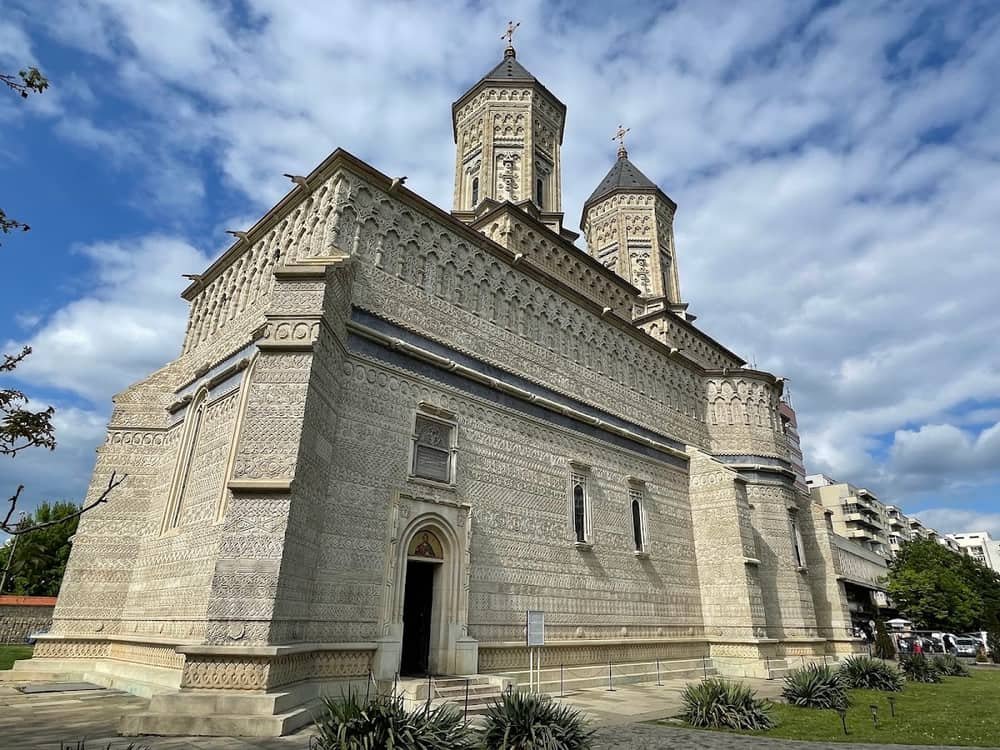
Trei Ierarhi, St Nicholas the Princely, Golia and the Metropolitan Cathedral are all within walking distance of one another. Add the ring of fortified hilltop monasteries — Cetățuia, Galata, Frumoasa — and you have a two-day route without repeating anything. The full guide: churches and monasteries.
A single monument that stands in for a whole museum quarter
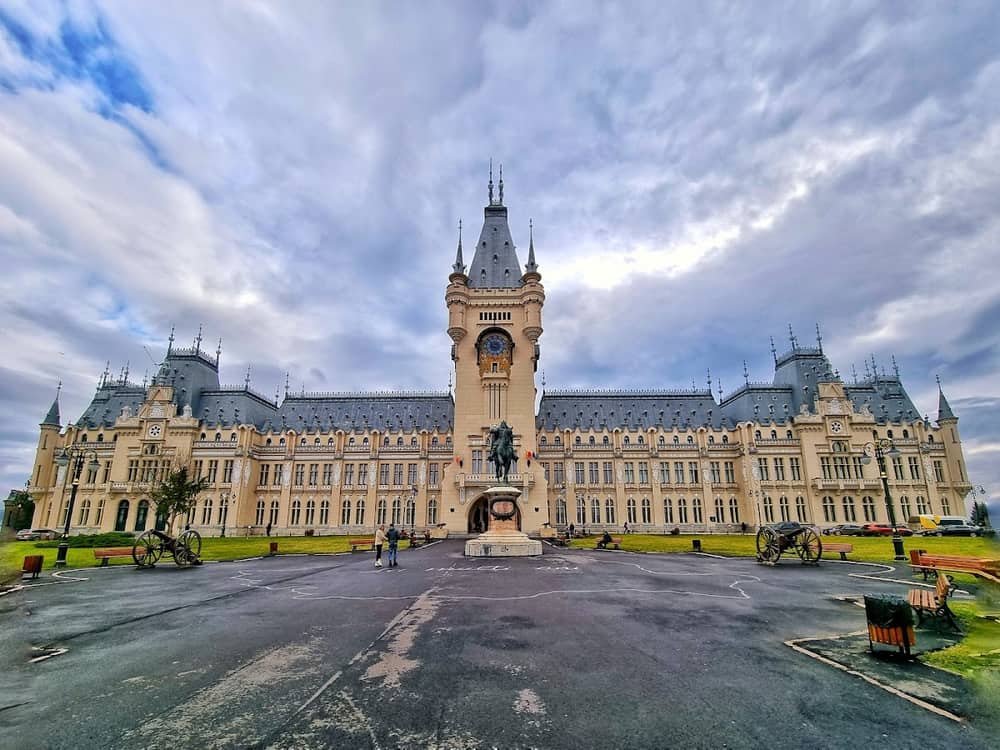
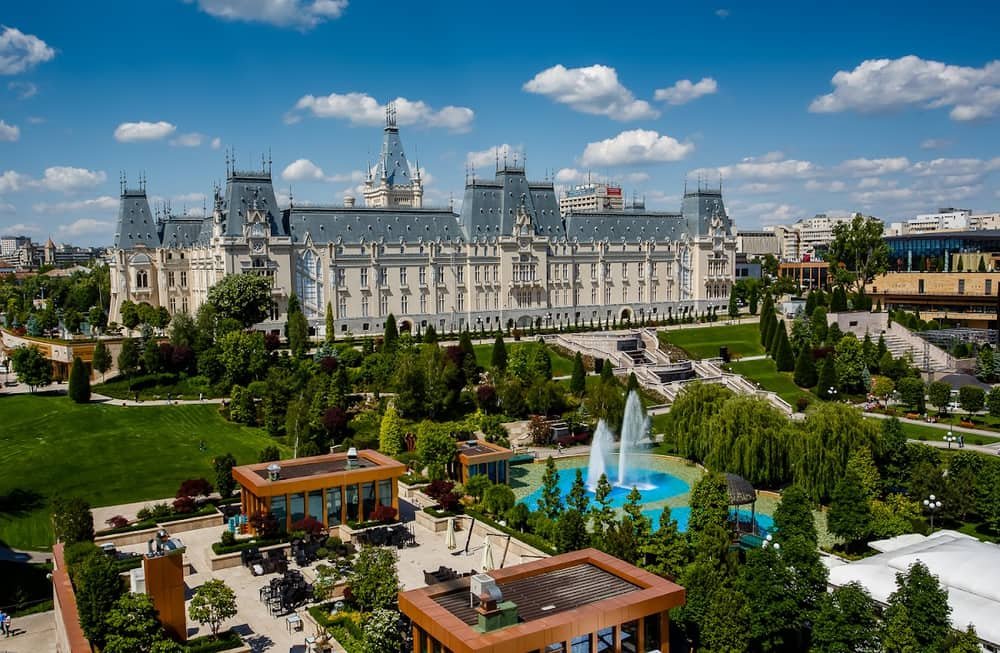
The Palace of Culture — 298 rooms, some 36,000 m² of built surface, four museums under one roof (history, ethnography, art, science and technology). The tower clock has three faces 3.25 metres across, with stained glass showing the zodiac, and eight bells play *Hora Unirii* on every hour.
Memorial houses
Their density is unusual for a city this size, because a good part of Romanian literature was written here: Creangă's Bojdeuca — Romania's first memorial house, opened in 1918 — the Mihai Eminescu Museum, the Vasile Pogor Museum, Dosoftei's House. See notable figures of Iași.
Serious green space
The "Anastasie Fătu" Botanical Garden is Romania's first (1856) and one of its largest; Copou Garden is the country's oldest landscaped public park. Detail in parks and nature.
The real seasonality
Iași has a very particular tourist calendar, dominated by a single event.
- 14 October — Saint Parascheva. Romania's largest pilgrimage. Hundreds of thousands of people, queues that can exceed twenty hours, accommodation sold out months ahead and completely altered traffic in the centre. If you are not coming for the pilgrimage, avoid the first half of October.
- April–June and September. The best windows: good weather, terraces open, the city full of students.
- July–August. Hot and empty. Good for museums and for anyone wanting quiet; poor for atmosphere.
- December–February. Seriously cold — the January average is −2.1 °C. Worth it for interiors and for the atmosphere in the centre.
What it costs
Iași is noticeably cheaper than Bucharest or Cluj, largely because it is a university city: the food and accommodation offer is calibrated to a student's wallet.
From the officially published tariffs:
- 4 lei for a transport ticket, valid 120 minutes;
- 30 lei for the 3-day CTP tourist pass;
- 7 lei/hour for parking in the central zone, free on Sundays and after 20:00.
For the rest, see Iași essentials.
Getting here
- By air: Iași International Airport is 8 km from the centre — one of the shortest city-to-airport distances in Romania. Bus 50 connects them every 30 minutes.
- By train: the station is in town. Bucharest is around six and a half hours by InterRegio, which makes flying competitive.
- By car: useful if you want the Bucovina monasteries or the surrounding vineyards as day trips.
What is missing
To be clear about the weak side too: Iași has no waterfront (the Bahlui is channelled), no extensive pedestrianised old town of the Sibiu or Brașov kind, and part of its civil heritage is unevenly conserved. It is a destination for people who want historical substance, not an unbroken postcard.
What Iași competes with
Worth putting in context so you know what you are choosing. Against Sibiu or Brașov, Iași has less pedestrianised old town and less postcard, but far more concentrated medieval religious heritage. Against Cluj, it has lower prices and less festival life. Against Bucharest, it has a much higher density of sights per square kilometre and much shorter distances.
Its real strength: you can see five centuries of architecture in a single day on foot, which in Bucharest would mean three days and a lot of metro.
Day trips from Iași
The city also works as a base, if you have a car:
- The Bukovina monasteries — to the north, towards Suceava. They are UNESCO heritage and need a full day.
- The surrounding vineyards — the local hills, including Bucium, have a winemaking tradition.
- The Republic of Moldova — the border is about 20 kilometres away, and Chișinău is closer than many Romanian cities.
For the railway station and the airport, see the dedicated pages.
Who it does not suit
Honestly: anyone wanting a beach, mountains, shopping or festival life. Iași has none of them at a competitive level. It is a cultural weekend destination, and a visitor looking for something else will leave disappointed — not through the city's fault but through the choice.
In short
- What it is: a cultural weekend destination — dense medieval heritage, museums, memorial houses.
- What it is not: beach, mountains, shopping, festivals or an extensive pedestrianised old town.
- The strength: five centuries of architecture in a day on foot.
- The Palace of Culture alone houses four museums, across 298 rooms.
- Season: April–June and September are best; avoid the first half of October.
- Price: noticeably below Bucharest and Cluj — a transport ticket 4 lei, a 3-day tourist pass 30 lei.
- As a base: the Bukovina monasteries and the Republic of Moldova are day trips.
Frequently asked questions
Is Iași worth visiting?
Yes, if you care about heritage and history. It has the densest concentration of medieval religious architecture of any large Romanian city, and a single monument — the Palace of Culture — housing four museums.
How many days do I need?
Two full days for the essentials, three if you also want the hilltop monasteries.
When should I NOT come?
In the first half of October, unless you are coming for the Saint Parascheva pilgrimage — accommodation is sold out, prices double and the centre is closed off.
Is Iași expensive?
No. It is noticeably cheaper than Bucharest or Cluj, being a university city. Public transport costs 4 lei a journey and the three-day tourist pass 30 lei.
Does it work as a weekend city break?
Yes, that is the format that suits it best. The flight from Bucharest takes about an hour and the centre is walkable.