On sustainability, Iași presents an unusual combination: very good inherited assets and very real contemporary pressure.
What it inherited well
Green space
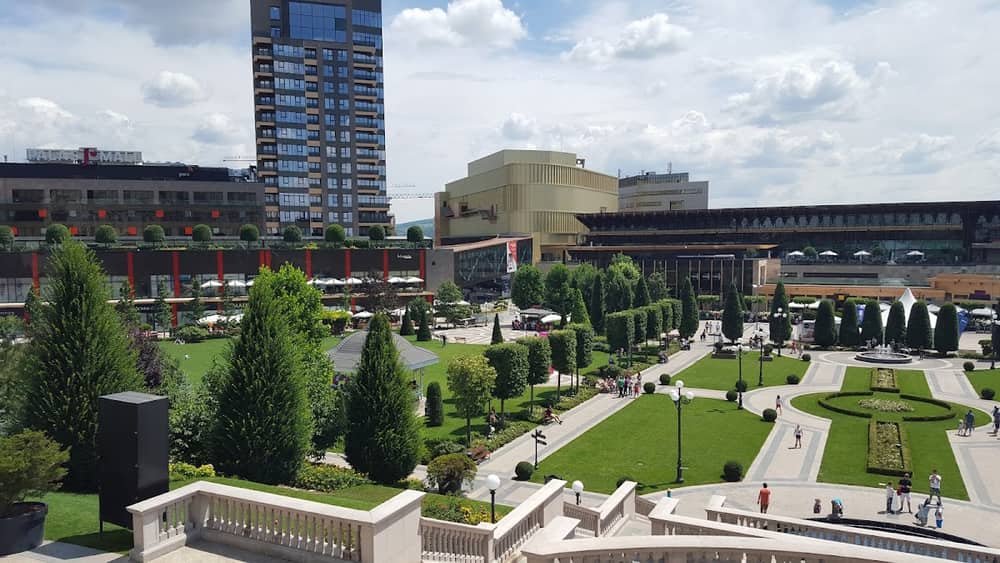
The city sits above the national average for urban greenery, largely thanks to the institutions it received in the nineteenth century:
- The "Anastasie Fătu" Botanical Garden — Romania's first (1856) and one of its largest.
- Copou Garden — the country's oldest landscaped public park (1833–1834).
- The Ciric lakes — woodland and water inside the city.
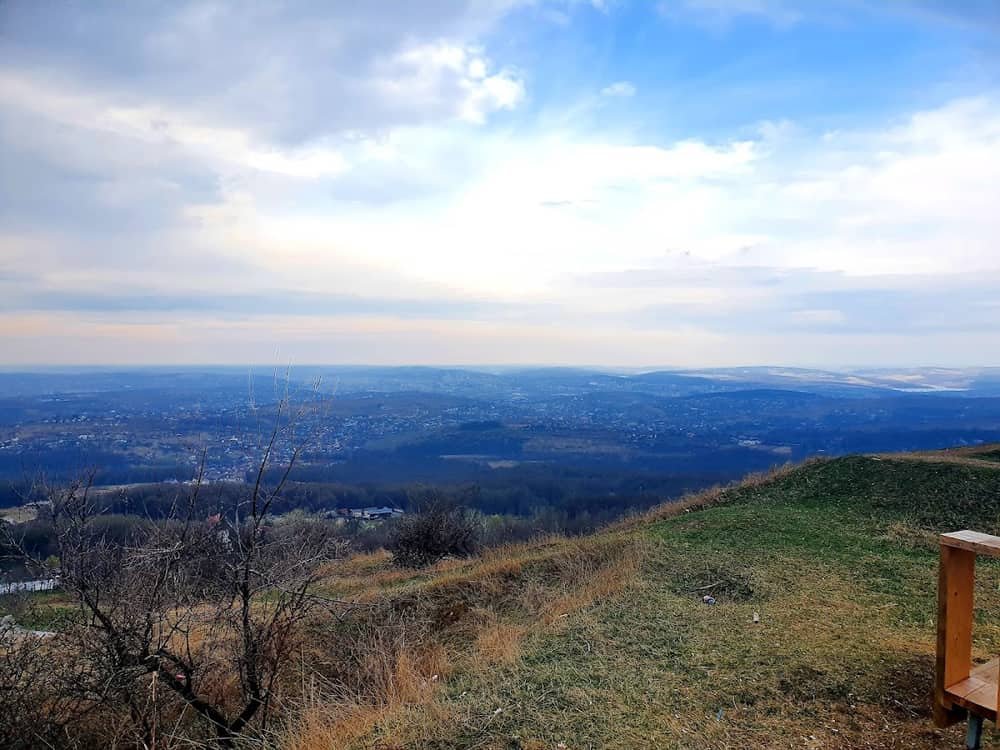
- The hills — Bucium, Repedea, Breazu — vegetated areas at the edge of the built-up zone.
Detail in parks and nature.
The tram
Nine lines over roughly 140 kilometres of track. An inherited electric transport system running on its own right of way for much of its route. In emissions per passenger, it is the city's best mobility asset.
Added to it are more than 40 bus lines over some 449 km. See transport in Iași.
What weighs on it
The metropolitan zone
This is the real pressure. 452,732 inhabitants in the Iași Metropolitan Zone against 271,692 in the municipality — nearly half the people who use the city daily live outside it.
The surrounding communes — Miroslava, Valea Lupului, Rediu, Bârnova, Ciurea — have grown explosively over the last two decades, largely with detached housing poorly served by public transport. The consequence is car commuting and heavy morning traffic.
The terrain
The city sits on hills, between 45 and 95 metres, with level differences that discourage walking and cycling on certain routes. You climb to Copou; you do not stroll there.
The climate
The extremes are real: a record low of −36.3 °C and a record high of 41.3 °C, with an annual mean of 10.5 °C and only 548 mm of precipitation a year. Hot, dry summers put pressure on green space. See geography and climate.
What you can do, as a visitor or a resident
- Use the tram. A ticket is 4 lei, valid 120 minutes; the 3-day tourist pass is 30 lei. It beats the car at rush hour on the main axes.
- Leave the car a stop or two out of the centre. Central parking costs 7 lei/hour between 08:00 and 20:00, and the tram gets you in within minutes.
- Parking is free everywhere on Sundays — but traffic is much lighter then too, so walking works.
- Tap water is drinkable, so a refillable bottle is a real saving.
What we do not claim
We do not publish air-quality scores, climate-neutrality targets or green-space-per-inhabitant percentages without a verifiable official source and the year they refer to. Environmental data change, and a figure without a date is a figure that will mislead in two years.
Real-time air quality, where data exist, is on the Iași Live page.
The central contradiction
Iași has, at the same time, one of the best green-space inheritances among Romanian cities and one of the heaviest car-commuting pressures. Both are real, and mentioning only one would be an incomplete description.
The good part comes from the nineteenth century: a botanical garden from 1856, a public park from 1833–1834, an electric tram network over roughly 140 kilometres of track.
The hard part comes from the last two decades: the metropolitan zone has grown to 452,732 inhabitants, against 271,692 in the municipality, largely through detached housing poorly served by public transport. The result is car commuting.
What would actually change things
We are not in the business of policy advice, but the arithmetic is simple: the metropolitan transport tariff is 9 lei for a 3-hour ticket, against 4 lei for the urban one, and 320 lei monthly against 130. For a commuter, the car becomes competitive precisely because of that gap.
What you can do concretely
- Take the tram at rush hour. It runs on its own right of way for much of the route, so it beats the car on the main axes.
- Park outside the central zone. 7 lei an hour in the centre, free after 20:00 and on Sundays — and a stop or two on the tram brings you back.
- A refillable bottle. Tap water is drinkable.
- In summer, avoid the car at midday. With a record high of 41.3 °C, the city is more pleasant in the morning and evening.
In short
- The Botanical Garden from 1856 and Copou Garden from 1833–1834 — inheritance, not recent planning.
- The CTP tram: nine lines over roughly 140 km of track, on its own right of way for much of the route.
- The real pressure comes from the metropolitan zone: 452,732 inhabitants against 271,692 in the municipality.
- The metropolitan transport fare is 9 lei against 4 lei for the urban one — hence the car's competitiveness.
- Central parking costs 7 lei an hour, free after 20:00 and on Sundays.
- Tap water is drinkable — a refillable bottle is a real saving.
- We do not publish environmental scores without an official source and a reference year.
What you can check yourself
One problem with the conversation about green cities is that it is conducted almost entirely in adjectives. It does not have to be: air quality in Iași is measured in real time and published openly, and we show it on the "Now" page alongside the weather.
The European air quality index comes from Open-Meteo, built on atmospheric modelling data and refreshed hourly. It is not a subjective impression and not a number we pick. If you want to see what traffic does to the air, compare a Tuesday morning at 8 with a Sunday at the same hour — the difference is visible and needs no commentary from us.
The same principle applies across the site: where a public measurement exists, we show it; where it does not, we say so rather than compensating with adjectives.
What remains to be filled in
There are things we cannot yet assert, because we have found no public source we can cite:
- The real separate-collection rate across the city — the figures in circulation differ between sources, and we do not pick the convenient one.
- Green space per inhabitant calculated on a consistent methodology — it depends heavily on what counts as green space.
- The measurable effect of the existing cycle lanes on how many journeys are made by bike.
We mark these as needing verification and will fill them in when an official source appears. Until then the rest of the article stands without them.
Frequently asked questions
Does Iași have a lot of green space?
Yes, above the average for Romanian cities, largely through its institutional inheritance: Romania's first botanical garden (1856) and the country's oldest landscaped public park (1833–1834).
Which is the greenest way to travel in Iași?
The tram — nine electric lines over roughly 140 km of track, running on their own right of way for much of the route.
Why is the traffic so heavy?
Because the metropolitan zone has grown far faster than the municipality: 452,732 inhabitants in the metropolitan zone against 271,692 in the city, most of them commuting by car.
Can you cycle in Iași?
The terrain is a real challenge — the city sits on hills with significant level differences. The flat axes in the valley are workable; the climb to Copou is another matter.
Is the tap water drinkable?
Yes. Many people still prefer bottled water for taste.