Iași eats at a student's pace, and that shows in three things: prices below Bucharest and Cluj, generous portions, and central venues staying open late on weeknights — which in other cities only happens on Fridays and Saturdays.
The local kitchen
Iași is in Moldavia, so the register is Moldavian: soups soured with borș, sarmale, tochitură, savoury pies. Plăcinte deserve a separate mention — they are a strong local habit, found everywhere from specialist shops to street stalls.
We are not going to invent a distinct "Iași cuisine". What is true: the city is the cultural capital of a region with a well-defined kitchen of its own, and the restaurants reflect that.
Where to eat, by area
The centre and Ștefan cel Mare boulevard
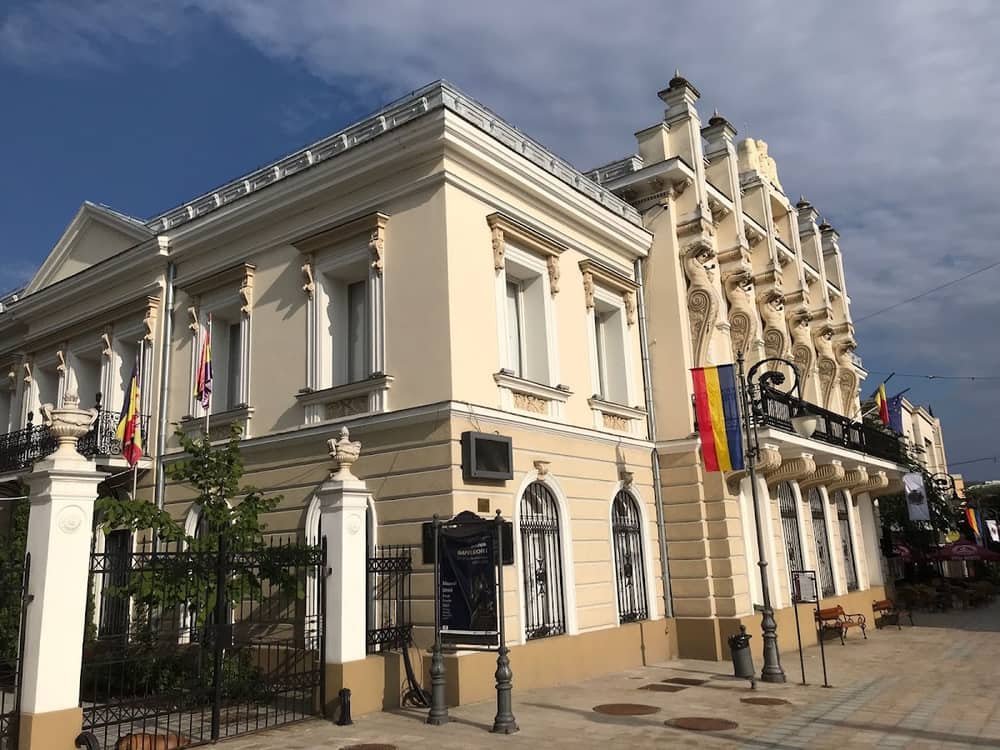
The greatest density of venues, from Romanian cooking to international. The advantage is that you can combine a meal with the sights — the Palace of Culture and Trei Ierarhi are a few steps away.
→ See restaurants in the centre
Palas
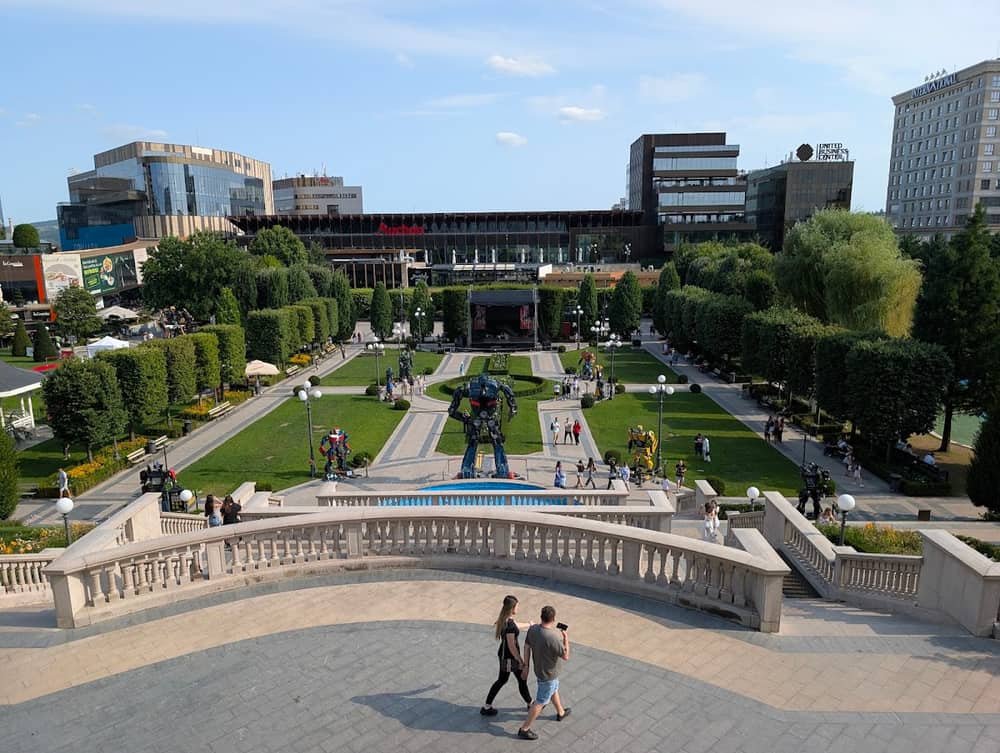
The greatest concentration of modern restaurants, terraces and cafés, in a landscaped perimeter below the Palace of Culture. It is also the only good option when it rains.
Copou
Student register: small venues, specialty coffee, low prices. The rhythm follows the academic year — busy from October to May.
The residential quarters
Tătărași, Păcurari, Nicolina — this is where locals eat, not tourists. Lower prices, larger portions, no pretensions about décor.
How we select
On this site we list only places rated above 4.0 with at least 60 Google reviews. The threshold is lower than on the Bucharest portal (where it is 100), because Iași is roughly seven times smaller — at 100 reviews only the chains would survive and the good neighbourhood places would vanish from the list.
We do not invent reviews and we do not write flattering descriptions. What you see for each venue is the real data: rating, review count, price tier, address, map.
→ All restaurants · Bars and clubs
Going out
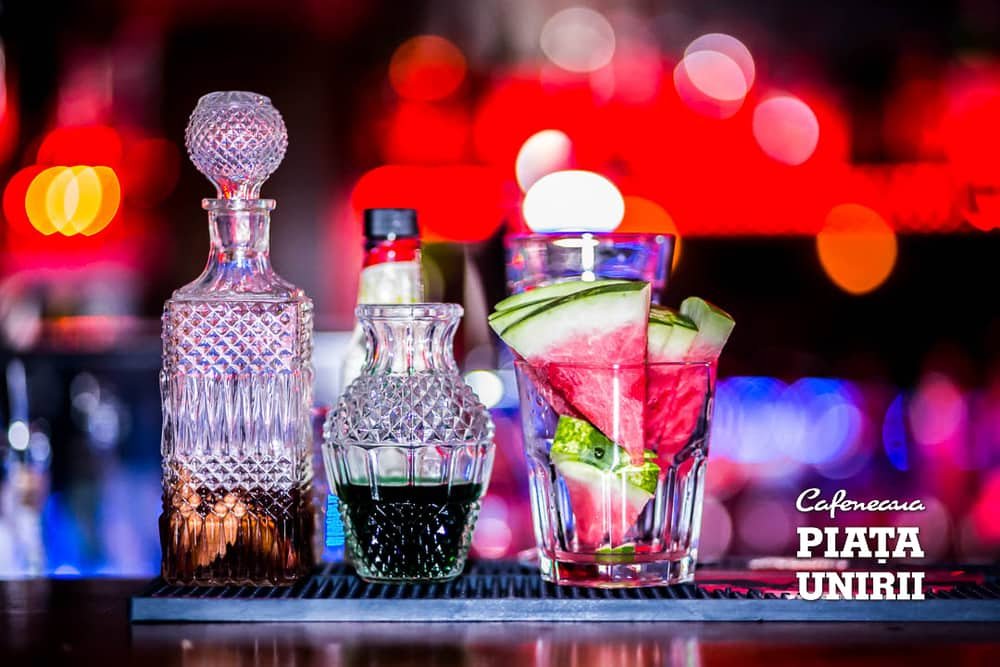
Evening life is calibrated to a student's wallet: many small venues, low prices, long hours. The register runs from specialty coffee shops and neighbourhood bars to clubs.
What to know: the rhythm follows the academic year strictly. From October to May the city is full every evening. In July and August it visibly empties — the terraces work, but the atmosphere is different.
For events — concerts, theatre, festivals — see the calendar and events and urban life.
Practical
- Booking is advisable for dinner at weekends, especially in the centre and at Palas.
- Contactless cards are accepted almost everywhere.
- Tipping is usually 5–10%; some venues already add a service charge.
- We do not publish invented price ranges for meals. Each venue's price tier (€ – €€€€) comes from Google data and is on its own page.
Why prices are lower
Not from lower quality but from the structure of demand. A city with more than 60,000 students has a critical mass of low-budget, high-frequency customers — the exact opposite of the seasonal tourism model, where a venue lives off three months a year and prices accordingly.
The side effect is the hours: central venues serve late even on a Tuesday evening, because there is demand. In cities without a student population, that only happens on Fridays and Saturdays.
When everything changes
July and August. The students leave, some venues cut their hours or close temporarily, and the terraces are the only ones running at capacity. Not a problem if you know in advance: it is the best time to get a table without booking, and the worst for atmosphere.
The first half of October. The Saint Parascheva pilgrimage brings hundreds of thousands of people; central venues run at full capacity and a reservation becomes essential.
What you will not find in Iași
So you do not arrive with the wrong expectations: the city has no fine-dining scene comparable to Bucharest's, nor a density of exotic international kitchens. What it has is solid Moldavian cooking, a good specialty-coffee offer in Copou and the centre, and the best value for money among Romania's large cities.
The filters on the restaurants page let you narrow by neighbourhood and price tier.
In short
- Prices are below Bucharest and Cluj — the direct effect of more than 60,000 students.
- Hours run late including on weeknights, which elsewhere only happens at weekends.
- The register is Moldavian: borș-soured soups, sarmale, tochitură, savoury pies.
- The centre and Palas have the greatest density of venues; Copou has the student register.
- Tătărași, Păcurari, Nicolina — this is where locals eat: large portions, low prices.
- Our selection: only places rated above 4.0 with at least 60 Google reviews.
- July–August: the city empties; a table without booking, but a different atmosphere.
Coffee
This is where Iași behaves like a much larger city, and the reason is demographic: a large student population means constant demand for places where you can sit for two hours with a laptop and a single order.
The practical consequence for a visitor is that you will find speciality coffee in the centre and in Copou at standards comparable to Bucharest or Cluj, at lower prices. The less pleasant consequence: during exam season, roughly January–February and May–June, those same places are full from morning to night, every table taken by someone revising.
If you want to work in peace, come outside exam season or pick Palas, where the crowd is more office than campus and turns over faster.
What changes on Sundays
Worth knowing before you plan: Sunday evening is the weakest moment of the week for going out in Iași. Some venues close early or do not open at all, and kitchens stop serving sooner than on other days.
Sunday lunch is the exact opposite — it is when families come out, and the large venues in Palas and along the boulevard are at their best. If you have one good meal to schedule in a weekend, put it at 1pm on Sunday, not 9pm.
Exact hours vary by venue and by season — check them on each restaurant's page or at the source.
Frequently asked questions
What do people eat in Iași?
Moldavian cooking: soups soured with borș, sarmale, tochitură and, very present locally, savoury pies. The city also has a substantial international offer, especially in the centre and the Palas area.
Where do you eat well in Iași?
The greatest density of venues is in the centre, on Ștefan cel Mare boulevard, and in the Palas area. For lower prices and larger portions, the residential quarters — Tătărași, Păcurari, Nicolina.
Is going out in Iași expensive?
No, compared with Bucharest or Cluj. As a university city, the offer is calibrated to a student's wallet.
How late are venues open?
In the centre, many serve late including on weeknights — a direct effect of the student population. Exact hours are on each venue's page.
How do you choose the venues on this site?
We include only places rated above 4.0 with at least 60 Google reviews. The rest are filtered out automatically when the data is collected.