Iași has the densest concentration of medieval religious architecture of any large Romanian city, and the explanation is simple: it was the capital for three centuries. Every ruler who wanted to leave something behind founded it here. And because the city was a target, the hilltop monasteries were built as small fortresses.
The ones in the centre
Trei Ierarhi Monastery
Founded by Vasile Lupu in the seventeenth century, this is the city's most spectacular medieval building. Its distinguishing feature: the entire façade is covered in carved stone, in a decorative repertoire of a density found nowhere else in Romanian Orthodox architecture. Moldavia's first printing press operated here, producing *Varlaam's Homiliary* in 1643, the first book printed in Romanian on Moldavian soil.
It was also here that the relics of Saint Parascheva were first brought, in 1641.
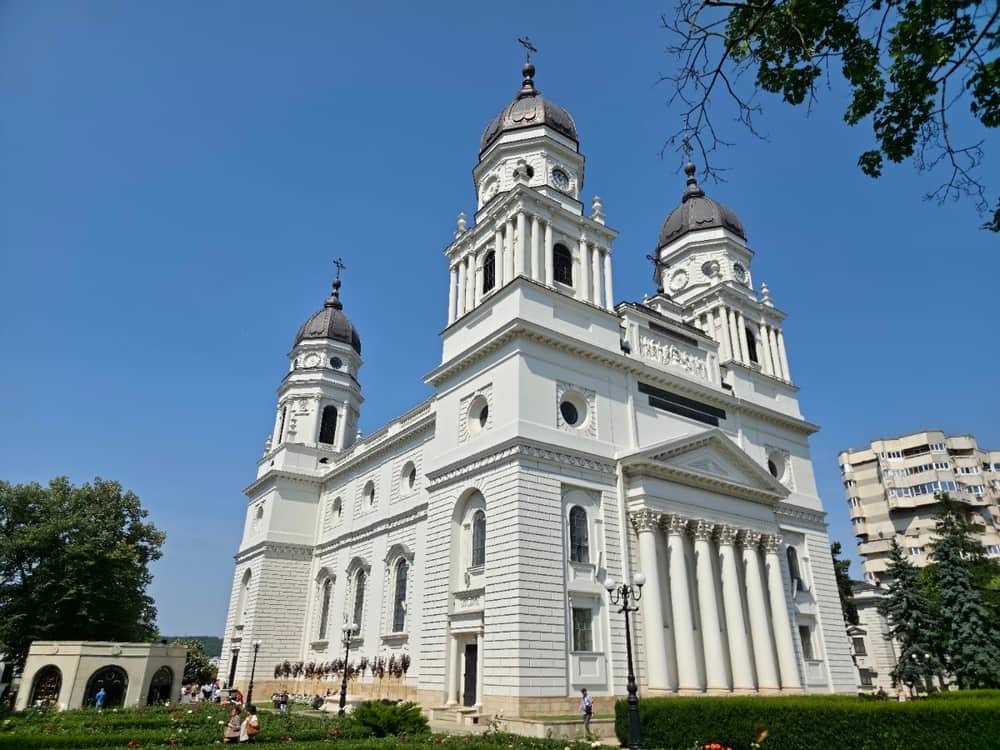
The Metropolitan Cathedral
The city's largest historic church and the centre of religious life in Moldavia. Construction took more than half a century, 1833–1887, with a two-decade interruption after the central vault collapsed in 1857. The original design was by Gustav Freywald, Bucher and Mihail Singurov; Alexandru Orăscu redesigned the structure, dropping the massive central dome in favour of four vaults separated by transverse arches.
It was consecrated on 23 April 1887, in the presence of King Carol I and Queen Elisabeta. The interior painting and the iconostasis — over 250 figures — are the work of Gheorghe Tattarescu, completed in July 1886.
Since 1889 it has held the relics of Saint Parascheva, patron of Moldavia, moved here from Trei Ierarhi.
St Nicholas the Princely Church
Founded by Stephen the Great, the oldest church still standing in the city. It was the court church of the rulers of Moldavia — they were anointed here.
The fortified hilltop monasteries
These are the part tourists most often miss, which is a shame: they sit exactly on the hills that controlled access to the capital.
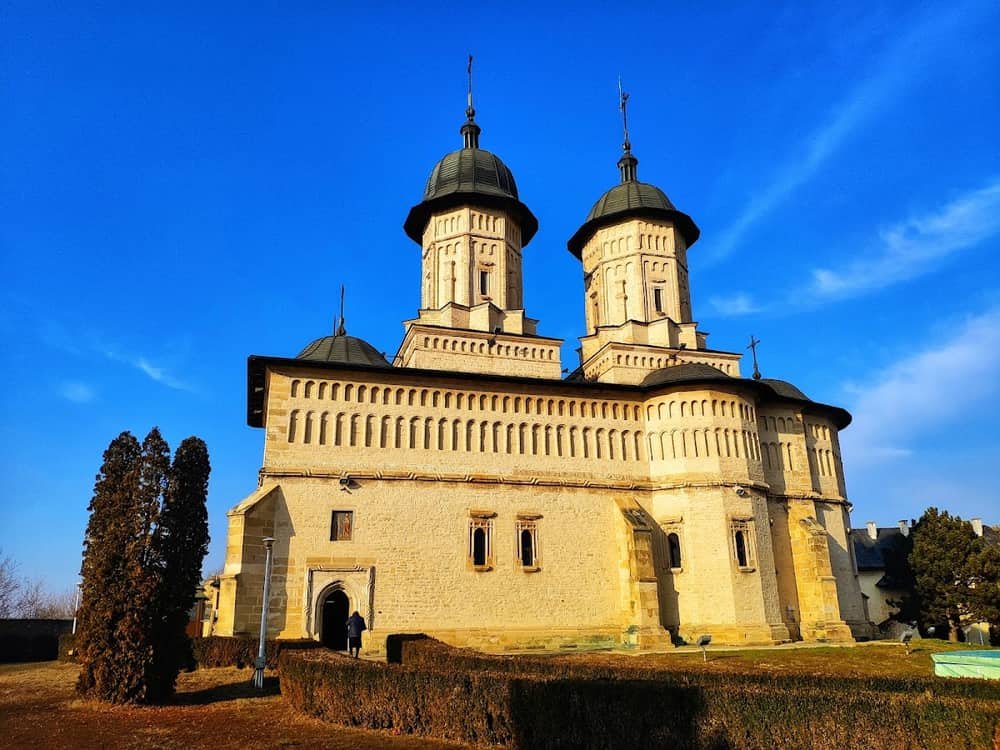
Cetățuia
On the hill of the same name, to the south. A fortified enclosure with walls and a tower, raised in the seventeenth century. It has one of the best views over the city — worth the climb for that alone.
Galata
On Galata hill, to the west. A sixteenth-century foundation with a curtain wall and a bell tower. It dominates the Bahlui valley.
Frumoasa
South of the centre, towards Nicolina. A monastic ensemble with a princely palace, in a setting less trafficked than the others.
Golia
In Târgu Cucu, east of the centre. Recognisable by its 30-metre tower, which can be climbed for the view. The enclosure is a fortress in full, with thick walls and corner towers.
The Saint Parascheva pilgrimage
On 14 October, the feast of Saint Parascheva, Iași becomes the destination of the largest pilgrimage in Romania. Hundreds of thousands come to venerate the relics brought out of the cathedral, and the queue sometimes stretches for kilometres, with waits of over twenty hours.
What that means in practice for a visitor not there for the pilgrimage:
- Accommodation books out months ahead and prices rise sharply.
- Central traffic changes completely — streets closed, transport diverted.
- If you want to see the city calm, avoid the first half of October.
Not only Orthodox
Iași was a multi-denominational city. The Great Synagogue is one of the oldest buildings of its kind left in Romania and the only functioning testimony to a community that counted dozens of synagogues before the 1941 pogrom. The Roman Catholic community is also substantial, above the national average, owing to proximity to the Catholic areas of Iași and Neamț counties.
A one-day route
The order that works, if you have a full day:
- Trei Ierarhi (centre) — start with the façade.
- St Nicholas the Princely — a few minutes' walk away.
- The Metropolitan Cathedral — also central.
- Golia — 15 minutes east; climb the tower.
- Cetățuia or Galata — one of the hills, for the view and the sunset.
For transport, see the CTP page; the hilltop monasteries are reachable by bus, but check the route first.
Dress code and visiting rules
The monasteries of Iași are active places of worship, not museums. The usual rules apply: shoulders and knees covered, and some monasteries ask women to cover their heads — headscarves are usually available at the entrance. Photography inside may be restricted; ask first.
Hours change with the season and with services. If your route is tight, check before setting out: a monastery during a service cannot be visited.
How they connect
Geography explains the route better than chronology. The central ones — Trei Ierarhi, St Nicholas the Princely, the cathedral — are minutes apart and fit into one morning. Golia is 15 minutes east, in Târgu Cucu. The hilltop ones — Cetățuia in Bucium, Galata on the western hill, Frumoasa towards Nicolina — need transport and a separate afternoon.
The full ordered route is in the dedicated guide.
Why the fortifications matter
This is the detail that sets Iași apart from other cities with religious heritage. The curtain walls, corner towers and tall belfries are not decorative: they were refuges and lookout points in a city that, as capital of Moldavia from 1564, was a permanent military target.
The Golia tower, around 30 metres, is the best example — it can still be climbed, and the view from the top is exactly what a seventeenth-century watchman saw.
Frequently asked questions
Which is the most important church in Iași?
The Metropolitan Cathedral, both in size and in role — it holds the relics of Saint Parascheva and is the seat of the Metropolis of Moldavia and Bukovina. In architectural terms, Trei Ierarhi is the most remarkable.
What is special about Trei Ierarhi Monastery?
The façade, covered entirely in carved stone — almost unique in Romanian Orthodox architecture. Moldavia's first printing press also operated here, producing in 1643 the first book printed in Romanian on Moldavian soil.
When is the Iași pilgrimage?
On 14 October, the feast of Saint Parascheva. It is the largest pilgrimage in Romania, with hundreds of thousands of participants and queues that can exceed twenty hours.
Can you climb the Golia tower?
Yes, the Golia monastery tower, some 30 metres high, can be climbed and offers a view over the centre. Check opening hours before visiting.
How many fortified monasteries are there in Iași?
The main four are Cetățuia, Galata, Frumoasa and Golia. All have curtain walls and towers, built in the sixteenth and seventeenth centuries, when the city was the Moldavian capital and therefore a military target.