The calendar of Iași is not read by month but through two overlapping cycles: the academic year, which fills and empties the city, and the religious calendar, which produces the largest mass event in Romania.
14 October: Saint Parascheva
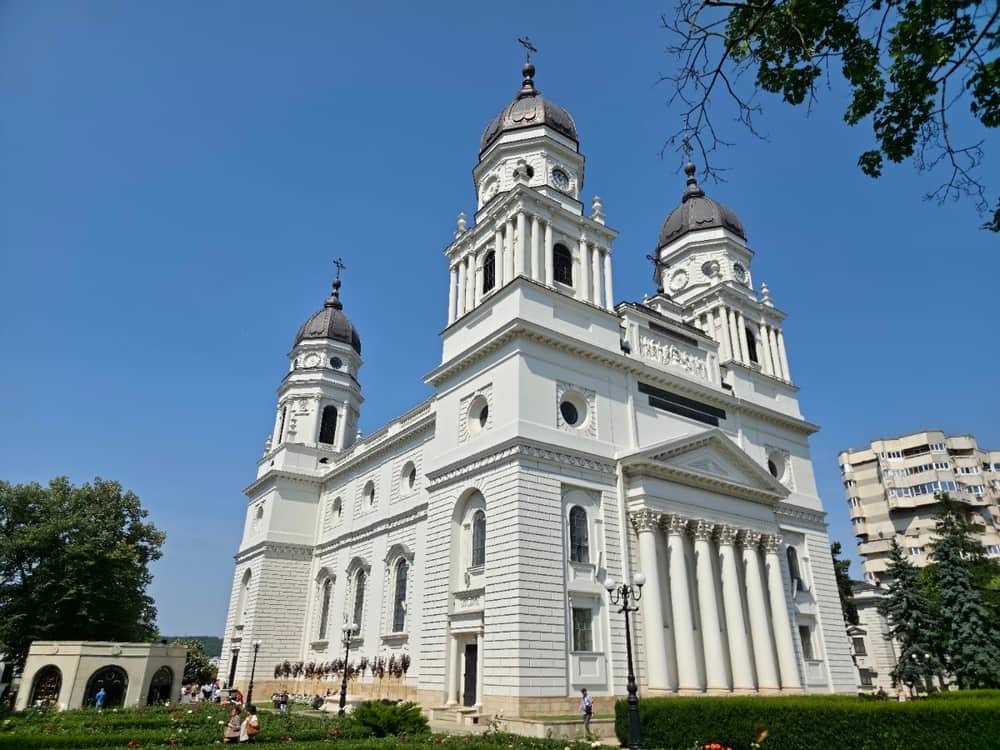
The largest pilgrimage in Romania. Hundreds of thousands come to venerate the relics of Saint Parascheva, brought out of the Metropolitan Cathedral. The queue sometimes stretches for kilometres, with waits that can exceed twenty hours.
The relics were brought to Moldavia in 1641 by Vasile Lupu and moved to the cathedral in 1889. See churches and monasteries.
The effect on the city is total:
- Accommodation books out months ahead and prices rise sharply.
- Streets are closed and public transport diverted.
- Retail and hospitality run at full capacity.
If you are not coming for the pilgrimage, avoid the first half of October.
The rhythm of the academic year
With more than 60,000 students, the city literally has two speeds:
- October – May: full. Concerts, performances, busy terraces, crowded trams, late hours on weeknights.
- July – August: empty. The best time for museums and for anyone wanting quiet; the worst for atmosphere.
- September: the transition. Rents rise, the city refills.
See Iași as a university city.
The institutions that make the programme
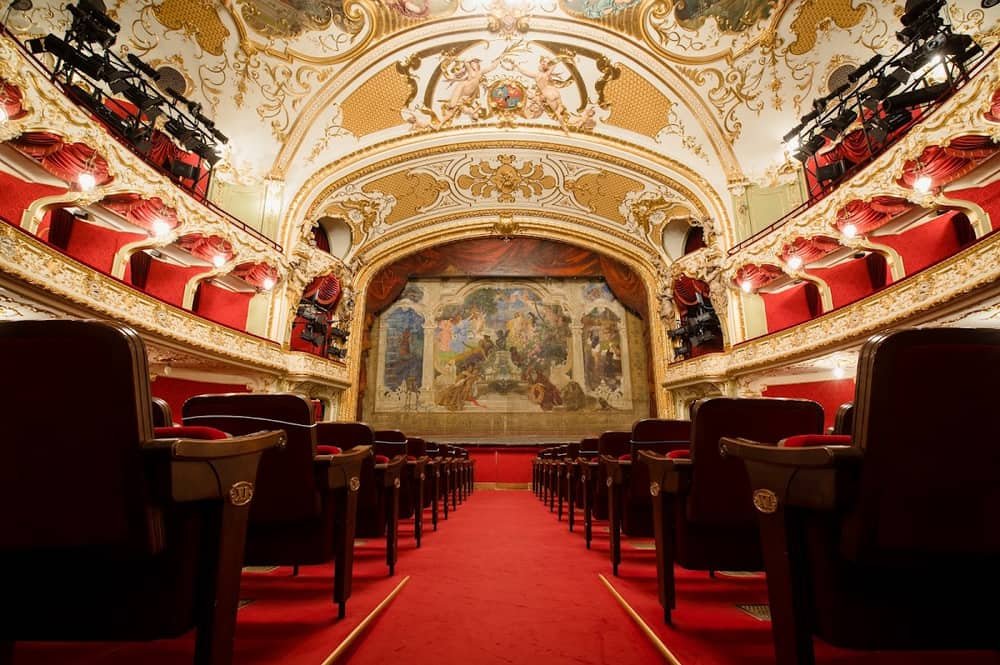
- The "Vasile Alecsandri" National Theatre — Romania's first national theatre, founded in 1840. The season follows the classic calendar, autumn to summer.
- The National Athenaeum of Iași — theatre and music programmes.
- The "George Enescu" National University of Arts — student concerts and productions are among the best reasons to go out, and they are usually cheap or free.
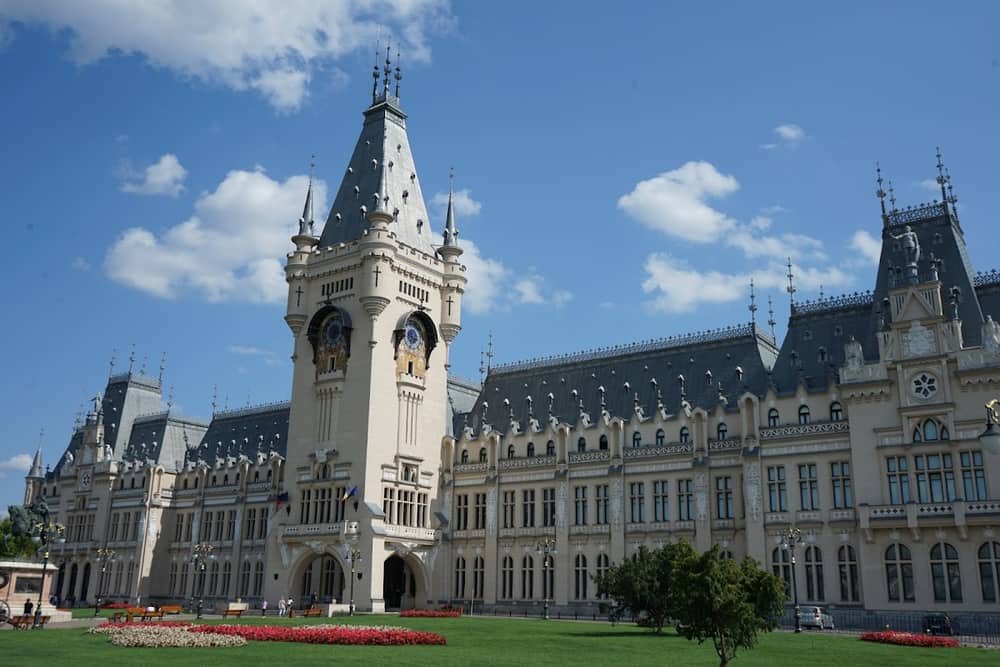
- The "Moldova" National Museum Complex — temporary exhibitions in the Palace of Culture, on top of the four permanent museums.
Summer, outdoors
When the city empties of students, life moves outside:
- The Ciric lakes — the leisure ground, with a laid-out beach and open-air events.
- Palas Garden — the central green space where events are most often held.
- The terraces in the centre and Copou run from spring to late autumn.
Our calendar
The events we list — concerts, theatre, exhibitions, festivals — are in the events section, with date, venue and a direct link to the official source. We do not invent events and we do not keep past ones in the list.
What to know
- Season matters more here than in other cities. A weekend in November and one in August are two different cities.
- 14 October is a category of its own. It is not "an event" but a week in which the city runs by different rules.
- The cultural programme is announced at short notice. Check institutions' official sources shortly before you visit.
Why 14 October is a category of its own
It is not "a big event". It is a week in which the city runs by different rules. Hundreds of thousands come to Iași for the relics of Saint Parascheva, and the veneration queue can stretch for kilometres, with waits exceeding twenty hours.
From the perspective of a visitor not there for the pilgrimage, that means three concrete things: accommodation is sold out months ahead and at much higher prices, central traffic changes completely with closed streets and diverted transport, and the central sights are crowded in ways they never are the rest of the year.
It is not a reason to avoid Iași — it is a reason to pick another date, if you want the city at ease.
The institutional programme versus the real one
The large institutions — the National Theatre, the Athenaeum, the Palace of Culture — have seasons and exhibitions announced well in advance. But a good part of the city's real cultural life comes from the university sphere: concerts and productions by students at the University of Arts, often cheap or free, announced at short notice.
That means a good calendar for Iași cannot be built three months ahead. Check institutions' official sources shortly before your visit.
Summer, when there is nothing on
In July and August the cultural programme thins out considerably as the students leave. The real alternative is outdoors: the Ciric lakes and Palas Garden, where most warm-season events are held.
In short
- 14 October, Saint Parascheva — Romania's largest pilgrimage, hundreds of thousands of participants.
- Accommodation sells out months ahead in that period, and the centre is closed off: streets shut, transport diverted.
- October – May: the city is full, with theatre seasons, concerts and late hours including on weeknights.
- July – August: it empties of students; the cultural programme thins out, but the museums are free of crowds.
- The National Theatre is Romania's first, from 1840; the Athenaeum has a theatre and music programme.
- Student concerts at the University of Arts are often cheap or free.
- In summer, life moves outdoors — the Ciric lakes and Palas Garden.
Why 14 October is a category of its own
It is not "a big event". It is a week in which the city runs by different rules. Hundreds of thousands come to Iași for the relics of Saint Parascheva, and the veneration queue can stretch for kilometres, with waits exceeding twenty hours.
From the perspective of a visitor not there for the pilgrimage, that means three concrete things: accommodation is sold out months ahead and at much higher prices, central traffic changes completely with closed streets and diverted transport, and the central sights are crowded in ways they never are the rest of the year.
It is not a reason to avoid Iași — it is a reason to pick another date, if you want the city at ease.
The institutional programme versus the real one
The large institutions — the National Theatre, the Athenaeum, the Palace of Culture — have seasons and exhibitions announced well in advance. But a good part of the city's real cultural life comes from the university sphere: concerts and productions by students at the University of Arts, often cheap or free, announced at short notice.
That means a good calendar for Iași cannot be built three months ahead. Check institutions' official sources shortly before your visit.
Summer, when there is nothing on
In July and August the cultural programme thins out considerably as the students leave. The real alternative is outdoors: the Ciric lakes and Palas Garden, where most warm-season events are held.
Frequently asked questions
What is the biggest event in Iași?
The Saint Parascheva pilgrimage on 14 October — Romania's largest pilgrimage, with hundreds of thousands of participants.
When is the city liveliest?
During the academic year, October to May. In summer, once the students leave, the pace drops noticeably.
What is there to do in Iași in summer?
The Ciric lakes for leisure, the terraces in the centre and Copou, Palas Garden for open-air events. The museums are also less crowded.
Where can I see what is on in the city?
In the events section of this site, with date, venue and a link to the official source.
Is it worth coming for 14 October?
It depends. If the religious phenomenon interests you, it is an experience unique in Romania. If you want to visit the city at ease, pick another date — accommodation is sold out and the centre is closed off.