Iași is the city where much of modern Romania was drafted: the Moldavian capital moved here in 1564, Alexandru Ioan Cuza was elected here in January 1859, the country's first modern university opened here in 1860, and the Romanian state took refuge here between 1916 and 1918. It is not a museum-city, though. It is Romania's third-largest city, a university centre with tens of thousands of students, and one of the country's biggest IT hubs.
The basic numbers
- 271,692 inhabitants in the city proper at the 2021 census — Romania's third city, after Bucharest and Cluj-Napoca.
- 452,732 inhabitants in the Iași Metropolitan Zone, close to 60% of the county's population.
- 93.9 km² total area, of which 71.1 km² is built-up, at a density of roughly 5,330 inhabitants/km².
- 45–95 metres above sea level — the city sits along the Bahlui valley and climbs its slopes.
- Seven hills give it its outline: Breazu, Bucium, Cetățuia, Copou, Galata, Repedea and Șorogari.
Where it actually is
Iași lies in eastern Romania, in the basin of the Bahlui river, where the Central Moldavian Plateau meets the Jijia Hilly Plain. It is about 20 kilometres from the border with the Republic of Moldova — which explains both the border traffic and the rail link to Chișinău.
In practice this means a city that climbs and drops. The centre is low, in the valley, along the Piața Unirii – Ștefan cel Mare și Sfânt boulevard – Palace of Culture axis. Copou is up on the hill, with the universities and the parks. The fortified monasteries — Galata, Cetățuia, Frumoasa — sit on the surrounding hills, precisely where an approaching enemy could once be seen.
The city's four layers
Capital of Moldavia (1564–1859)
The first documentary mention dates from 6 October 1408, in a commercial privilege issued by Alexandru cel Bun, where Iași appears as a customs point. It became the capital in 1564, when Alexandru Lăpușneanu moved the princely court from Suceava. Three centuries followed in which everything that matters was built here: Trei Ierarhi, Golia, and the princely court over which the Palace of Culture would later rise.
The city of the Union (1859)
On 5 January 1859 the elective assembly of Moldavia chose Alexandru Ioan Cuza as its ruler; three weeks later Wallachia did the same. Between 1859 and 1862 both Iași and Bucharest served as capitals of the United Principalities. Then the capital settled in Bucharest alone — and Iași received the cultural institutions in compensation: the university, the theatre, the library.
The wartime capital (1916–1918)
When Bucharest fell under German occupation, the government, parliament, royal court and treasury moved to Iași. For two years a provincial city carried an entire state on its shoulders, through typhus and famine.
Today's city
Universities, teaching hospitals serving the whole of Moldavia, industry (ArcelorMittal, Antibiotice SA) and an IT sector with names like Amazon, AMD, Oracle and Bitdefender. Students set the rhythm: the city empties in July and August and fills again in early October.
What to see on a first day
With a single day, this order works:
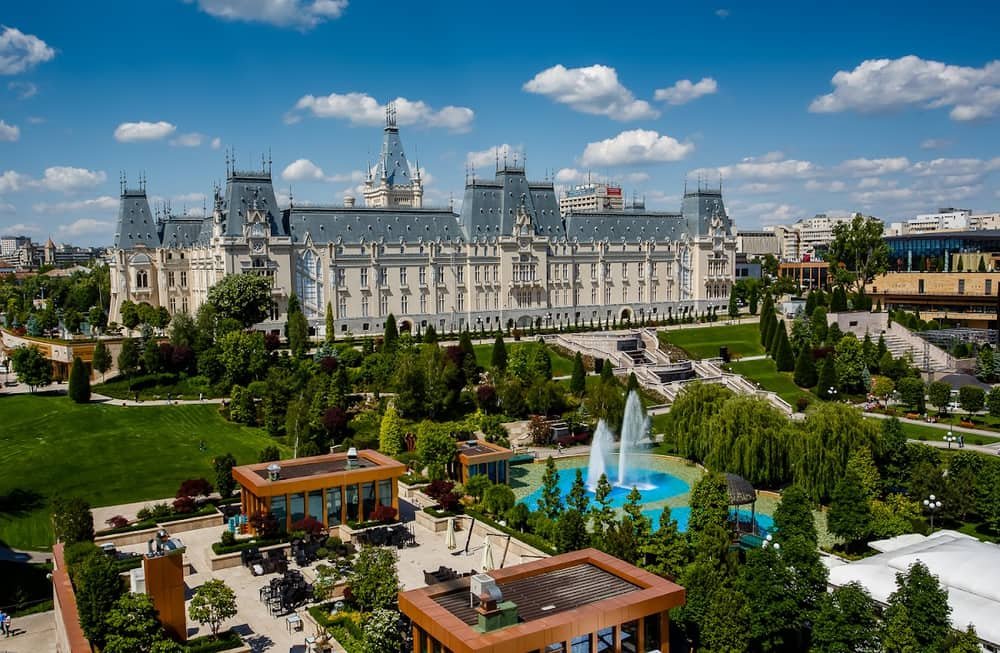
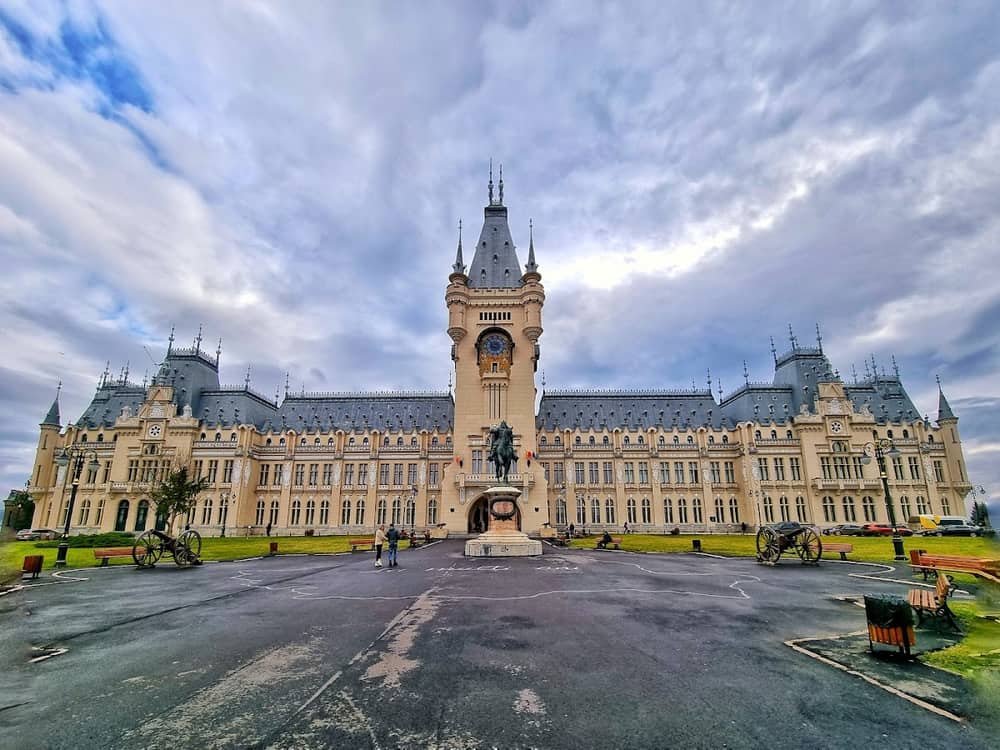
- The Palace of Culture — 298 rooms, four museums, and tower bells that play *Hora Unirii* on every hour.
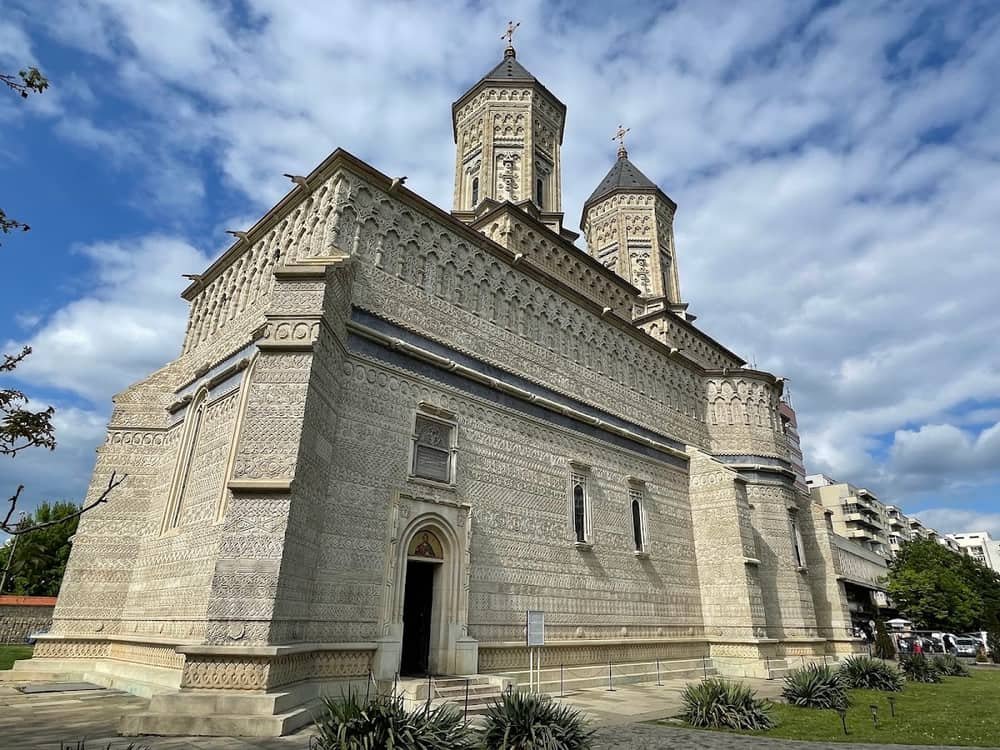
- Trei Ierarhi Monastery — its entire façade carved in stone, founded by Vasile Lupu.
- The Metropolitan Cathedral — the city's largest historic Orthodox church, holding the relics of Saint Parascheva.
- Copou — the university, the Botanical Garden and Eminescu's linden tree.
For longer routes, see the guide for tourists and what tourism in Iași looks like.
Getting around
There is no metro. The backbone is CTP's nine tram lines, supplemented by more than 40 bus lines. A ticket costs 4 lei and is valid for 120 minutes; the simplest way to pay is a contactless bank card tapped on the validator. Full detail is on the public transport page.
The airport is only 8 km east of the centre, and the railway station is in town, at the end of Strada Arcu.
What Iași is not
Useful from the other side too, so you do not arrive with the wrong expectations. Iași has no metro — the network rests on nine tram lines. It has no districts, but a single city hall for the whole city. It is not the capital of the Republic of Moldova; it was the capital of the Principality of Moldavia, a medieval Romanian state. And it is no longer Romania's second city — at the 2021 census it is the third, after Bucharest and Cluj-Napoca.
It also has no extensive pedestrianised old town of the Sibiu or Brașov kind, and no waterfront: the Bahlui is channelled along most of its urban course. It is a destination for people who want historical substance, not an unbroken postcard.
The two calendars
The city runs on two overlapping cycles worth knowing before you pick a date:
- The academic year. With more than 60,000 students, Iași is full from October to May and visibly empty in July and August. The terraces, the queues, the crowded trams and the late weeknight hours all belong to this cycle.
- 14 October. On Saint Parascheva's feast, the city receives Romania's largest pilgrimage — hundreds of thousands of people, accommodation sold out months ahead, the centre closed off. If you are not coming for it, avoid the first half of the month.
Detail in when to visit Iași.
Frequently asked questions
Why is Iași called "the capital of Moldavia"?
Because it literally was, for almost three centuries: from 1564, when Alexandru Lăpușneanu moved the princely court from Suceava, until 1859. The phrase survives as a cultural title, not an administrative one — Romania's capital is Bucharest, and the Republic of Moldova is a separate state with its capital in Chișinău.
How many people live in Iași?
271,692 in the city proper according to the 2021 census, making it Romania's third city after Bucharest and Cluj-Napoca. Counting the metropolitan zone, the figure rises to 452,732.
How many days do I need in Iași?
Two full days cover the essentials — the Palace of Culture, Trei Ierarhi, the Metropolitan Cathedral, Copou and the Palas area. With three you also fit the monasteries on the surrounding hills and an evening out in the centre.
What are the seven hills of Iași?
Breazu, Bucium, Cetățuia, Copou, Galata, Repedea and Șorogari. The number is symbolic and deliberately echoes Rome — the ambition of a former capital.
Is Iași an expensive city?
No, not compared with Bucharest or Cluj. As a university city it has a wide supply of cheap food and accommodation, especially outside the central area. See Iași essentials for indicative prices.