Iași covers well in two days, on one condition: do not hop from one hill to another. The city is built on hills, and a route ordered thematically rather than geographically costs you an extra hour of walking each day.
Day 1 — the centre, on foot
Morning
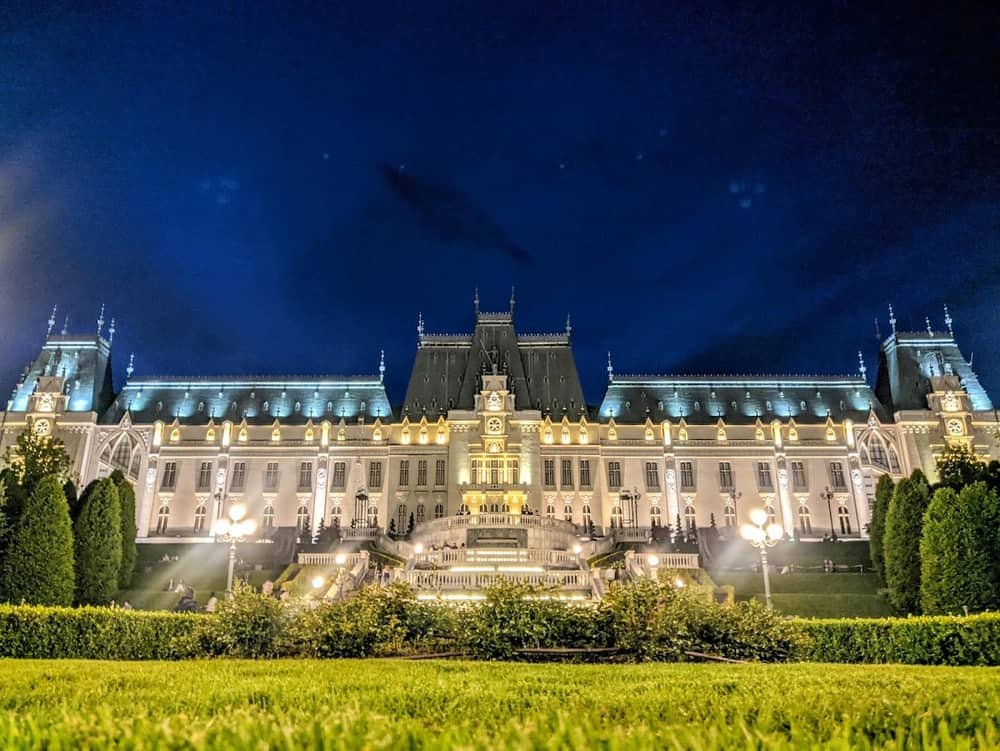
Start with the Palace of Culture, while it is empty. It is the city's largest historic building: 298 rooms, some 36,000 m², four museums under one roof. If you only have time for one, take the Museum of Moldavian History — it gives you the context for the rest of the weekend.
Step outside on the hour, to hear the eight tower bells playing *Hora Unirii*.
Towards lunch
A few minutes' walk away:
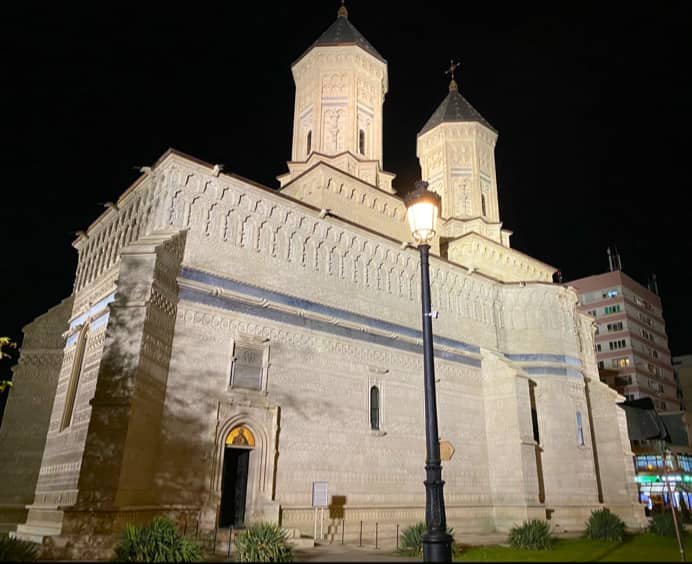
- Trei Ierarhi Monastery — stand in front of the façade for five minutes. It is covered entirely in carved stone, something you will not see anywhere else in Romanian Orthodox architecture.
- St Nicholas the Princely Church — founded by Stephen the Great, the oldest in the city.
Lunch around Palas or on Ștefan cel Mare boulevard. See restaurants.
Afternoon
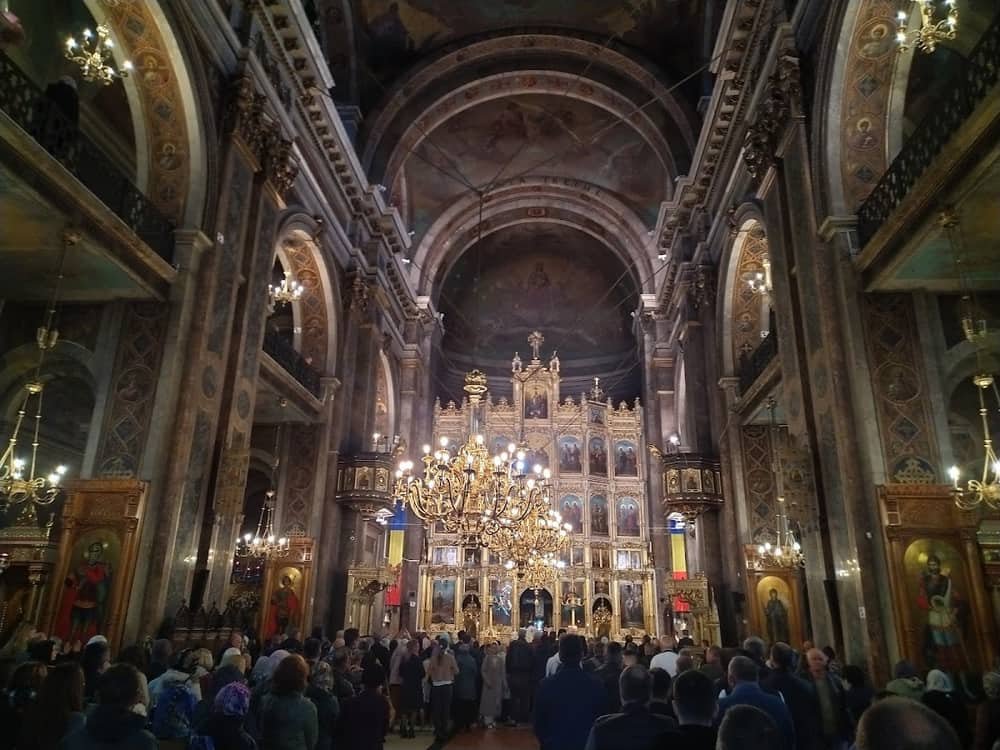
- The Metropolitan Cathedral — the city's largest historic church, with the relics of Saint Parascheva and Gheorghe Tattarescu's painting.
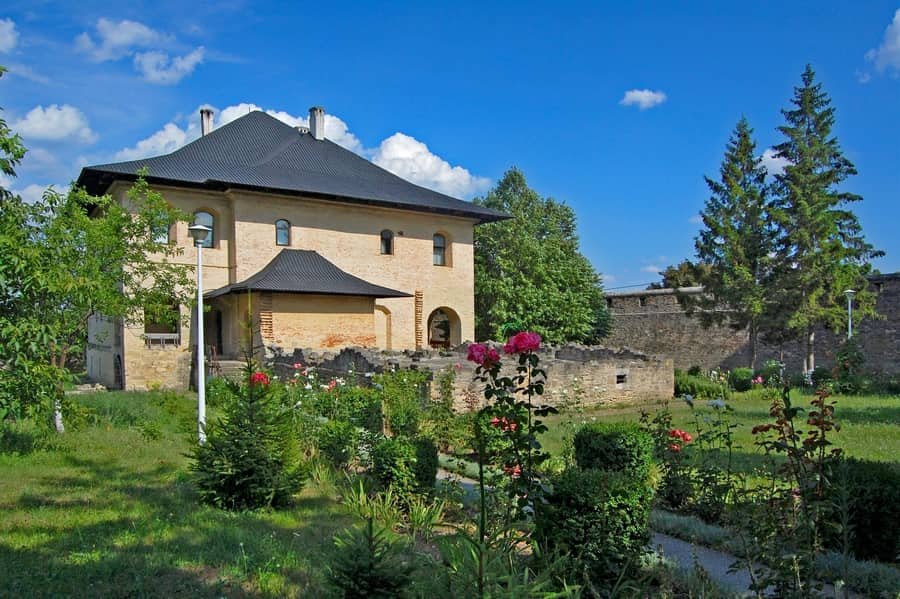
- The Union Museum — the building that served as Cuza's residence.
- The National Theatre — Romania's first, 1840. At least from outside; if you catch a performance, so much the better.
Evening
The centre and the Palas area have the greatest density of venues. If it is term time, the city is busy until late even on weeknights. See where to go out.
Day 2 — Copou, on tram 1
Take tram 1 from the centre. A ticket costs 4 lei and is valid 120 minutes — enough for the whole climb.
Morning
- The "Anastasie Fătu" Botanical Garden — Romania's first, 1856, and one of its largest. Allow at least two hours. It is far bigger than it looks on a map.
Towards lunch
- Copou Garden — the country's oldest landscaped public park, with Eminescu's linden tree and the Obelisk with Lions.
- "Alexandru Ioan Cuza" University — Romania's first modern university (1860). The Hall of the Lost Footsteps can usually be visited; check the hours.
- The Vasile Pogor Museum — the house where Junimea met.
Afternoon
Walk down to Ion Creangă's Bojdeuca in Ticău. It is a two-room cottage and Romania's first memorial house (1918). The contrast with yesterday's Palace of Culture is everything you need to know about this city.
If you have energy left
Climb to Cetățuia Monastery for sunset. It is the best view over Iași.
What to leave for next time
- The Galata and Frumoasa monasteries and the Golia tower.
- The Repedea reserve, with its fossil outcrops.
- The Ciric lakes, in summer.
The three-day route is in Iași for tourists.
Tips that matter
- Get the 3-day CTP pass, 30 lei. It pays for itself on day two.
- Check museum hours. They change seasonally, and some close on Mondays.
- Wear comfortable shoes. The level difference between the centre and Copou is real.
- Avoid 14 October unless you are coming for the Saint Parascheva pilgrimage — the centre is closed off and accommodation sold out.
What you sacrifice, however you plan
Two days will not cover everything, and knowing in advance what you are leaving out is more useful than trying to fit it all in. What usually gets left out:
- The hilltop monasteries — Cetățuia, Galata, Frumoasa. They need a separate afternoon and transport.
- The Golia tower and the Great Synagogue, in Târgu Cucu.
- The Repedea reserve and Bucium hill.
- The Ciric lakes, if it is summer.
All of them belong to day three — see Iași for tourists.
The long-weekend variant
If you have Friday evening and Sunday afternoon on top, the optimal order changes:
- Friday evening — the centre, on foot, plus a meal around Palas. Do not force museums at that hour.
- Saturday — day 1 of the route above, but start earlier.
- Sunday morning — Copou, with the Botanical Garden.
- Sunday afternoon — one hill, for the view and the sunset. Cetățuia is the best.
Sunday has a practical advantage: parking is free across the whole city.
The transport budget
For two full days, the 3-day CTP tourist pass at 30 lei is the best choice. Otherwise, single tickets at 4 lei become more expensive from the fourth journey of the day. A taxi up to the hilltop monasteries is a justified expense — these are real climbs.
In short
- Day 1, the centre on foot: Palace of Culture → Trei Ierarhi → St Nicholas the Princely → the cathedral → the National Theatre.
- Day 2, Copou on tram 1: Botanical Garden → Copou Garden and the linden → the University → Pogor Museum → the Bojdeuca.
- Step outside the Palace of Culture on the hour to hear the bells playing *Hora Unirii*.
- The Botanical Garden needs two hours minimum — far larger than it looks on a map.
- The 3-day CTP pass, 30 lei, is the best choice for a weekend.
- On Sundays parking is free across the whole city.
- What to leave for next time: the hilltop monasteries, the Golia tower, Repedea, Ciric.
Frequently asked questions
Are 48 hours enough for Iași?
Yes, for the essentials. Two full days cover the Palace of Culture, Trei Ierarhi, the Metropolitan Cathedral, Copou with the Botanical Garden and the Palas area. A third day would be for the hilltop monasteries.
In what order should I visit?
Geographically, not thematically. Day one the centre, on foot; day two Copou, on tram 1. The city is on hills, and hopping between them costs time.
How much is transport for two days?
The 3-day CTP tourist pass costs 30 lei. A single ticket is 4 lei, valid 120 minutes.
What do I do if it rains?
The Palace of Culture alone can fill half a day, with four museums. Add the Union Museum and the Natural History Museum and the day is covered. The Palas area is indoors and has restaurants.
Is it worth climbing to the hilltop monasteries?
Yes, to at least one. Cetățuia has the best view over the city. These are real climbs, so many people take a taxi up and walk down.