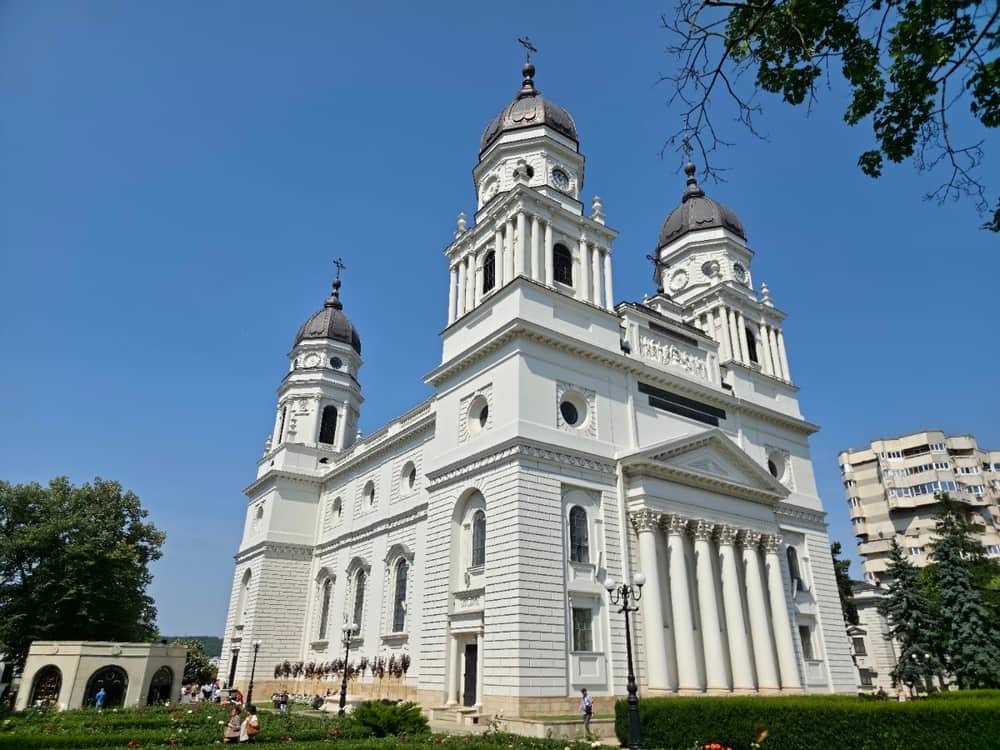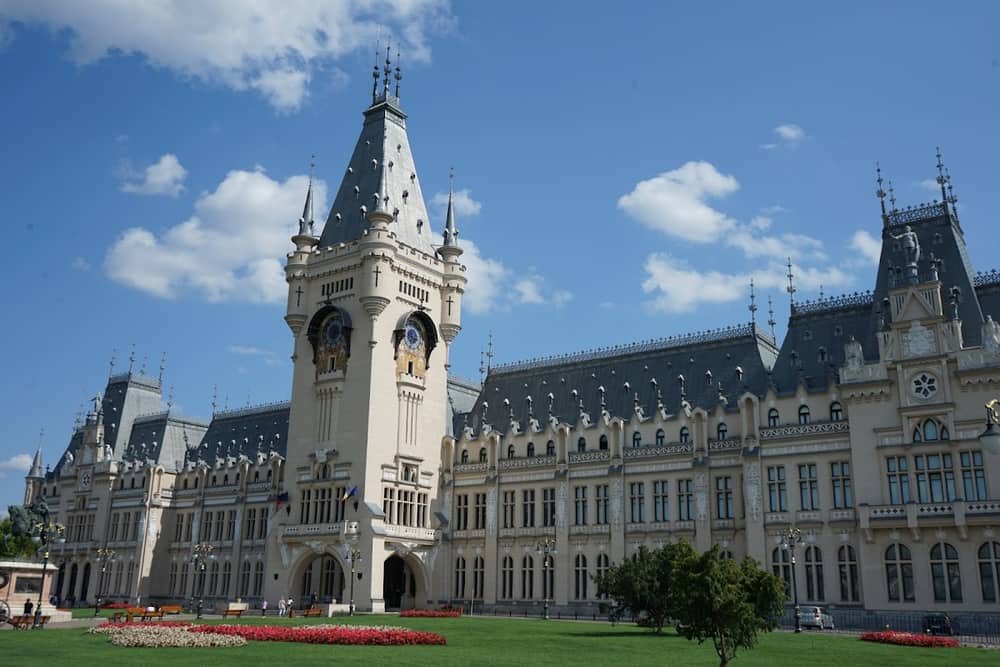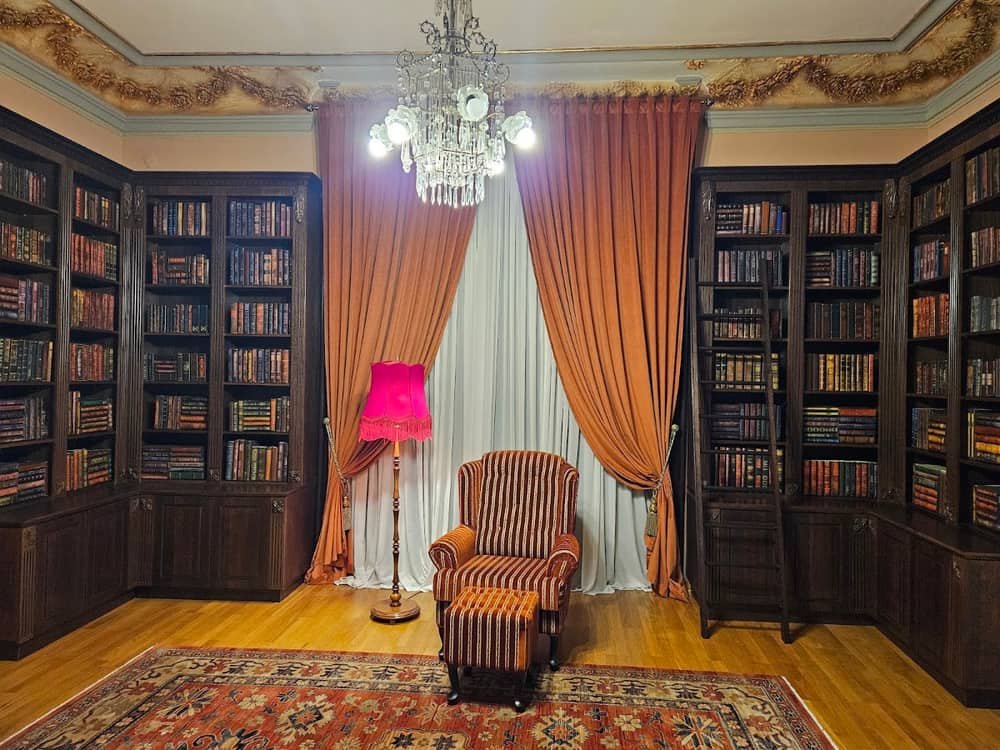
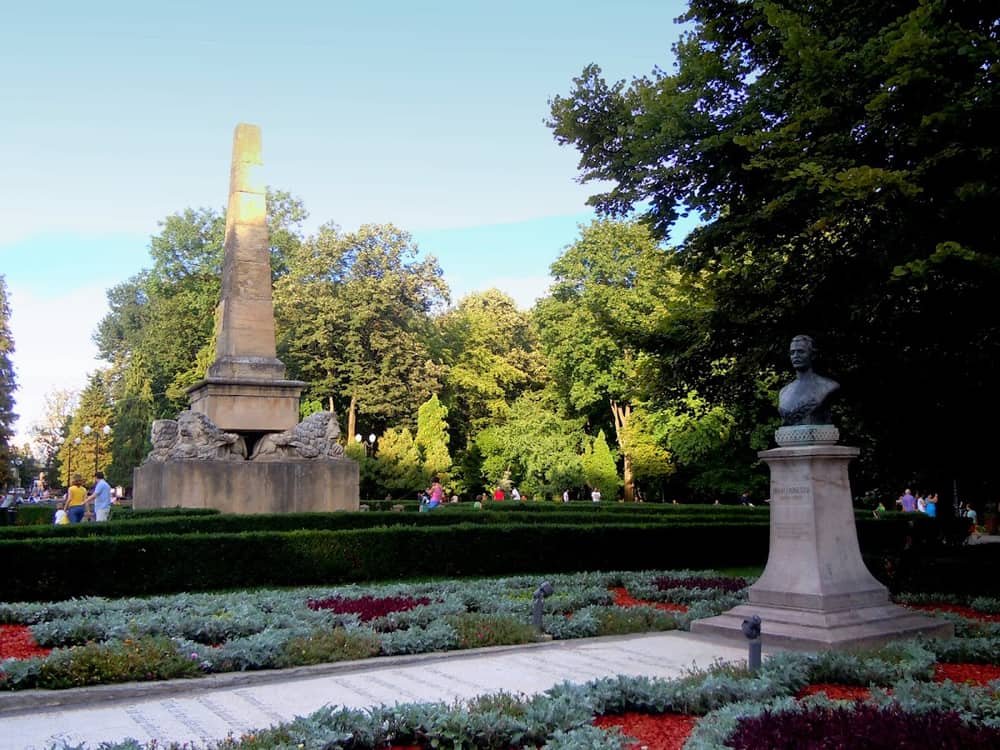
If Iași has one place that explains what happened to the city after 1859, it is Copou. Not because it is the most spectacular, but because it is the physical concentration of a single decision: a city that lost political power was given institutions instead, and those institutions settled here.
Copou Garden
Copou Garden is the oldest public park in Romania, laid out in the nineteenth century. It is not a botanical garden — the Botanical Garden is, in the same area — but a promenade park, conceived as a meeting space for an urban society just discovering its middle class.
An unhurried hour covers it. Together with the Botanical Garden it is one of the two green spaces in Iași worth scheduling as a destination rather than a break.
The linden
Eminescu's linden is the city's most loaded symbol after the Palace of Culture. Legend has it the poet wrote beneath it; what can be stated without reservation is that the tree became, over time, an object of literary pilgrimage and one of the few pieces of natural heritage in Romania with the standing of a national symbol.
It matters to keep those two things apart. That the linden is a symbol is verifiable. The biographical detail attached to it varies between sources, and we do not pick whichever version sounds better — the sight's page stays with what can be supported.
Beside it stands the Obelisk with Lions, one of the city's oldest public monuments.
The university
On the same hill stands "Alexandru Ioan Cuza" University, Romania's first modern university, opened in 1860 — a year after the city gave up capital status. That is not a calendar coincidence: it was, in essence, the compensation.
Today the city has five state universities and over 60,000 students, and it shows in everything: in opening hours, in prices, in how empty the city is in July. The theme is developed in Iași, a university city and in education in Iași.
The main building is worth seeing from outside even if you do not go in. The full list is on the universities page.
Stringing it into one visit
The order that works, starting from the bottom:
- The climb up the boulevard — 20–25 minutes on foot from Piața Unirii, or a few stops on public transport.
- The university — the exterior, plus the University Museum if it interests you.
- Copou Garden — the linden, the obelisk, the promenade. An hour.
- The Botanical Garden — if you still have the energy and the time. It asks two or three hours on its own.
Total: an easy half-day, or a full day if you do the Botanical Garden properly.
The climb
Worth saying, because it is constantly underestimated: Copou is a hill. The city ranges from roughly 45 to 95 metres in altitude, and Copou is the top end. In summer, at midday, walking up is a bad decision.
Coming down, by contrast, is pleasant and leads naturally into the centre — which makes the order above (tram up, walk down) the most comfortable one.
When it is best
Spring and autumn. Summer is too exposed at midday; in winter the park loses its main argument. September has an extra advantage: the academic year begins and the hill fills with people — which, if you want to see the city alive, is exactly the point.
The city's full calendar is in when to visit Iași.
Practical
The area is thinner on restaurants than the centre but has good cafés — the student crowd creates constant demand. The list, filterable by neighbourhood, is under restaurants.
For anyone considering staying here: Copou is the choice for quiet and greenery, with the climb as the trade-off. The full comparison between areas is in where to stay in Iași.